
An Ant Control Treatment Company helps homeowners identify ant infestations, locate nesting areas, and choose appropriate treatment methods to control unwanted ant activity. Ants may enter homes through small cracks, windows, doors, foundations, and other openings while searching for food, water, and shelter. Although a few ants may not seem like a serious concern, repeated activity can indicate a nearby colony that requires attention.
For homeowners in Springfield, VA, understanding how ant infestations develop and how professional ant control works can make household pest management easier. Different ant species have different nesting habits, food preferences, and behaviors. Therefore, identifying the type of ant is an important first step before selecting a treatment approach.
Sure Shot Pest provides pest control services for property owners looking to address ant activity and other common pest concerns. This guide explains how professional ant control works, what happens during an inspection, which treatment options are available, and how homeowners can reduce the chances of future infestations.
Why Do Ants Enter Homes?
Ants usually enter residential properties in search of three basic resources: food, water, and shelter. Even a small amount of spilled juice, uncovered food, or moisture around plumbing can attract worker ants.
Once ants discover a food source, they may leave a chemical trail that helps other members of the colony follow the same route. This is why homeowners sometimes notice a long line of ants moving between a kitchen counter, pantry, or entry point.
Common reasons ants enter homes include:
- Food crumbs and uncovered meals.
- Sugary drinks, fruit, and sweet substances.
- Leaking pipes and damp areas.
- Pet food left uncovered.
- Trash containers without secure lids.
- Cracks around doors, windows, and foundations.
- Nearby outdoor nests and landscaping.
Removing these attractants can help reduce ant activity, but an established colony may require additional treatment.
Common Types of Ants Found Around Homes
Understanding the ant species is essential because different ants respond to different control methods. An experienced pest control specialist considers the insect’s appearance, nesting location, feeding behavior, and activity patterns before recommending treatment.
1. Carpenter Ants
Carpenter ants are among the larger ant species commonly encountered around residential properties. They excavate galleries in damp or damaged wood to create nesting spaces. Unlike termites, carpenter ants do not eat wood for nutrition.
Homeowners may notice wood shavings, rustling sounds inside walls, or large ants around windows and wooden structures. Moisture problems and damaged wood can make certain areas more attractive to these ants.
2. Odorous House Ants
Odorous house ants are small, dark-colored insects that frequently enter kitchens and other areas where food is available. When crushed, they may produce a noticeable odor.
These ants commonly follow trails along countertops, floors, cabinets, and wall edges. Their ability to establish multiple nesting sites can make control more challenging.
3. Pavement Ants
Pavement ants commonly build nests beneath sidewalks, driveways, patios, and concrete slabs. They may enter buildings through small gaps around foundations and doors.
They are often attracted to sweet and greasy food sources, making kitchens and storage areas common places to encounter them.
4. Fire Ants
Fire ants are known for their painful stings and defensive behavior. They generally build visible soil mounds in outdoor areas, lawns, and landscaped spaces.
Because fire ants can pose a risk to people and pets, homeowners should avoid disturbing active mounds and consider appropriate professional treatment.
How an Ant Control Treatment Company Handles an Infestation
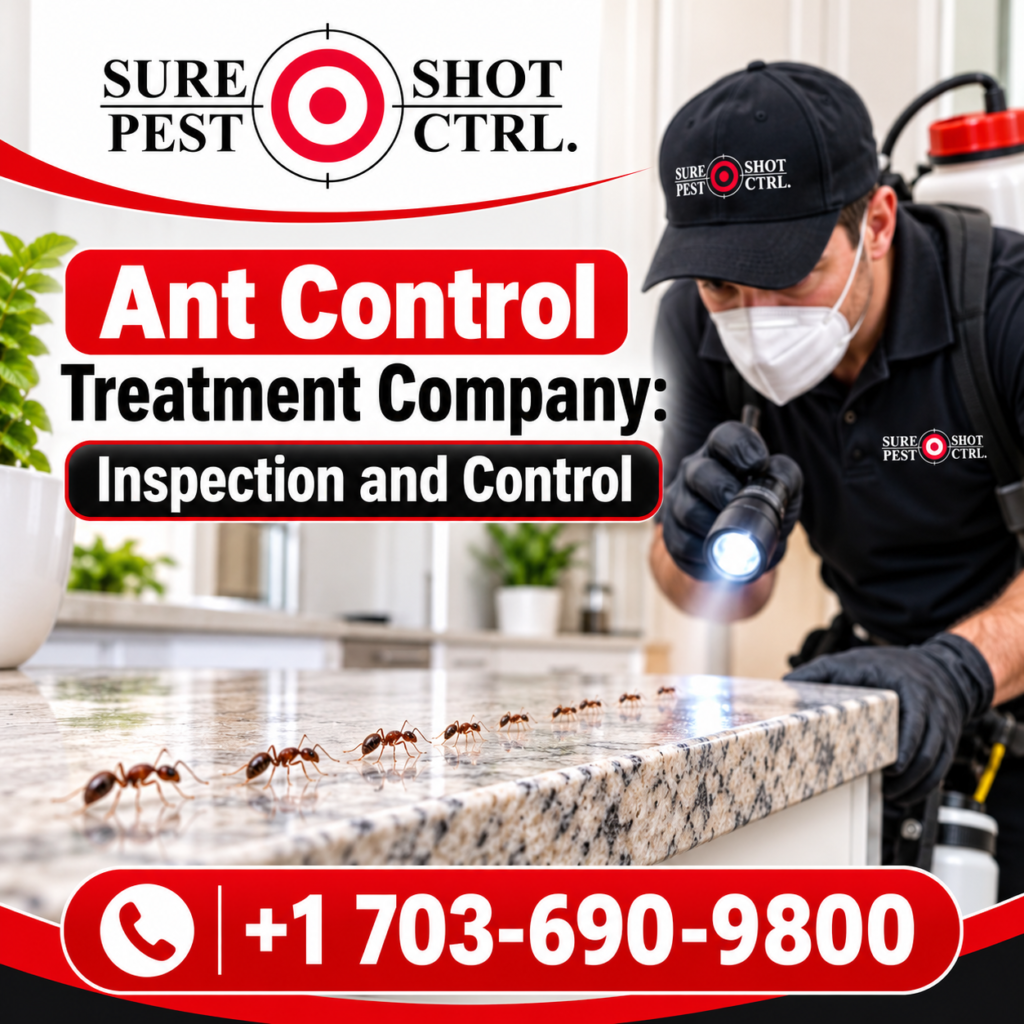
A professional Ant Control Treatment Company follows a systematic process to understand the infestation and determine suitable control methods. Simply spraying visible ants may not address the colony or nesting areas responsible for repeated activity.
A proper treatment strategy focuses on identifying the ant species, locating entry points, understanding environmental conditions, and selecting suitable products.
Step 1: Initial Property Inspection
The process generally begins with an inspection of the affected property. A pest control specialist looks for visible ant trails, nesting areas, moisture sources, food attractants, and possible entry points.
Common inspection locations include kitchens, bathrooms, basements, garages, utility rooms, windows, and exterior foundations.
The specialist may also inspect outdoor areas such as mulch beds, tree bases, patios, and landscaping features where ant colonies may develop.
Step 2: Ant Species Identification
Identifying the ant species helps determine which control approach is appropriate. Different species have different feeding habits and nesting preferences.
For example, carpenter ants may require attention to moisture-damaged wood, while pavement ants may be associated with outdoor nesting areas beneath concrete surfaces.
Correct identification helps prevent ineffective treatments and supports a more targeted pest management plan.
Step 3: Treatment Selection
After the inspection, the specialist determines which treatment options are suitable for the infestation.
Depending on the ant species and property conditions, available approaches may include targeted bait applications, crack-and-crevice treatments, exterior perimeter applications, and nest-focused treatments.
The choice of treatment should consider the location of ant activity, the presence of children and pets, and product label instructions.
Step 4: Monitoring and Follow-Up
Ant control may require monitoring because worker ants can continue appearing while a colony is being addressed. Some treatment methods take time to affect the colony.
A pest control professional may recommend follow-up inspections or additional treatment when activity continues.
Homeowners should report recurring ant trails or newly discovered nesting areas so the treatment plan can be adjusted when necessary.
What Are the Most Effective Ant Control Treatment Options?
There is no single treatment that works equally well for every ant species or infestation. An appropriate method depends on the colony’s location, feeding behavior, nesting habits, and the conditions around the property.
Ant Bait Treatments
Ant baits are designed to attract worker ants with food-based materials containing an active ingredient. Depending on the product, workers may carry bait back to the colony, allowing the treatment to reach other ants.
Bait placement and selection are important. Using the wrong bait or placing it near competing food sources can reduce its effectiveness.
Liquid Ant Treatments
Certain liquid products are used in targeted areas where ants travel or enter a property. Depending on the product and application method, treatments may help reduce ant activity around selected locations.
Applications should always follow product label directions and applicable safety requirements.
Exterior Perimeter Treatments
Exterior treatments may be applied to appropriate areas around a building’s foundation, entry points, or other locations where ant activity is identified.
The purpose is to address outdoor ant movement and reduce opportunities for ants to enter the structure.
Nest-Targeted Treatments
When a nest can be located, treatment may focus on the nesting area rather than only addressing visible worker ants.
This approach is particularly relevant when ants repeatedly appear in the same location or when outdoor nesting activity is contributing to indoor infestations.
Why Is Professional Ant Inspection Important?
An inspection is an important part of successful ant management because visible ants do not always reveal the location of the colony.
For example, ants appearing near a kitchen sink may be traveling from a nest behind a wall, beneath flooring, or outside the building. Treating only the visible trail may leave the source of the infestation untouched.
A professional inspection helps homeowners understand:
- Which ant species is present.
- Where ants are entering the property.
- Whether nests are located indoors or outdoors.
- Which environmental conditions attract ants.
- Whether moisture or structural issues contribute to the problem.
- Which treatment methods are appropriate.
For Springfield homeowners, seasonal weather changes, landscaping, moisture, and nearby outdoor nesting areas can influence ant activity. A property-specific inspection helps determine what is happening rather than relying on a one-size-fits-all solution.
Signs You Need an Ant Control Treatment Company
Recognizing early signs of an infestation can help homeowners address the problem before ant activity spreads to additional areas.
Some common warning signs include:
Visible Ant Trails: Long lines of ants moving along countertops, floors, walls, or windows often indicate an established food trail.
Repeated Ant Activity: Seeing ants in the same location over several days may indicate a nearby nesting area or consistent entry point.
Ants Around Wooden Structures: Larger ants near wooden beams, window frames, or damp areas may indicate carpenter ant activity.
Outdoor Ant Mounds: Small soil piles around sidewalks, driveways, and landscaping may indicate outdoor nesting activity.
Ants Near Moisture Sources: Bathrooms, kitchens, laundry rooms, and areas with leaking pipes can attract certain ant species.
If these signs appear repeatedly, arranging a professional inspection can help determine the source of the problem.
How to Prevent Ant Infestations in Your Home
Professional treatment is only one part of long-term ant management. Homeowners can also take practical steps to make their properties less attractive to ants.
Keep Food Storage Areas Clean
Store food in sealed containers and clean kitchen surfaces regularly. Pay particular attention to crumbs, sugary spills, and food residue around appliances.
Keep pet food covered when it is not being used, and avoid leaving dirty dishes in the sink for extended periods.
Seal Cracks and Entry Points
Inspect doors, windows, foundations, and utility openings for small gaps. Seal suitable openings with caulk or weatherstripping to reduce potential ant entry points.
Check areas around plumbing and electrical installations where small openings may provide access.
Address Moisture Problems
Repair leaking faucets, pipes, and other plumbing problems. Keep bathrooms, kitchens, and basements properly ventilated to reduce unnecessary moisture.
If carpenter ants are present, investigate damp or damaged wood because moisture-related conditions may contribute to nesting activity.
Maintain Outdoor Landscaping
Trim vegetation that touches exterior walls and keeps mulch, leaves, and other organic materials from accumulating directly against the building.
Remove unnecessary standing water and inspect outdoor structures for signs of ant activity.
Monitor Problem Areas
Regularly check kitchens, storage spaces, basements, garages, and exterior foundations. Early detection makes it easier to identify recurring ant activity and determine whether professional attention is necessary.
Choosing the Right Ant Control Treatment Company in Springfield
Selecting an appropriate pest control provider is an important decision for homeowners dealing with recurring ant problems.
When comparing an Ant Control Treatment Company in Springfield, consider its inspection process, treatment methods, communication, and approach to pest prevention.
A reliable company should be able to explain how it identifies ant species, evaluates nesting areas, and selects suitable treatment options.
Here are some important factors to consider:
Inspection Approach: Look for a company that evaluates both indoor and outdoor conditions rather than focusing only on visible ants.
Treatment Knowledge: Different ant species require different management approaches. Ask how the company determines which treatments are suitable.
Safety Information: The provider should explain product application instructions, precautions, and any necessary preparation before treatment.
Prevention Recommendations: A good pest management plan should include practical suggestions for reducing food sources, moisture, and potential entry points.
Communication: Homeowners should understand what the treatment involves, what to expect afterward, and whether follow-up visits may be necessary.
For residents in Springfield, VA, working with a pest control company familiar with local property conditions can help address common ant problems.
Why Consider Sure Shot Pest for Ant Control?
Ant infestations can become frustrating when insects repeatedly appear in kitchens, bathrooms, basements, and other parts of a home.
Sure Shot Pest offers pest control services for homeowners seeking assistance with common pest concerns, including ant activity.
The right approach starts with understanding the infestation rather than treating every situation in the same way. Ant species, nesting locations, property conditions, and environmental factors all influence the treatment process.
Whether you are noticing occasional ants or repeated activity around your property, understanding the source of the problem is an important step toward effective pest management.
Homeowners in Springfield can contact Sure Shot Pest to discuss their ant control concerns and learn more about available pest management services.
FAQs
1. What Does an Ant Control Treatment Company Do?
An Ant Control Treatment Company inspects properties, identifies ant species, locates nesting areas, and recommends suitable treatment methods. Depending on the infestation, services may include bait applications, targeted treatments, and exterior perimeter applications. Professionals may also provide prevention recommendations to help reduce future ant activity.
2. How Long Does Professional Ant Control Treatment Take?
The treatment time depends on the ant species, infestation size, and application method. Some treatments reduce visible activity relatively quickly, while bait-based approaches may take several days or longer to affect a colony. A pest control specialist can explain the expected timeline after inspecting the property.
3. How Much Does an Ant Control Treatment Company Charge?
The cost depends on property size, ant species, infestation severity, treatment requirements, and the number of visits needed. Some infestations require targeted applications, while others may involve additional inspection and monitoring. Contact a local pest control provider for pricing based on your property’s specific conditions.
4. When Should I Contact an Ant Control Treatment Company in Springfield?
Consider contacting an Ant Control Treatment Company in Springfield when ants repeatedly appear indoors, form visible trails, or establish nests near your property. Professional inspection can help identify the species, locate potential nesting areas, and determine suitable treatment options before the infestation becomes more difficult to manage.
Conclusion: Take Control of Ant Problems with Sure Shot Pest
Ant infestations can affect kitchens, bathrooms, basements, outdoor spaces, and other areas around residential properties. Understanding the ant species, identifying entry points, and locating nesting areas are important steps in developing an appropriate treatment strategy.
A professional Ant Control Treatment Company can help homeowners evaluate infestation conditions, select suitable treatment methods, and understand practical prevention measures.
For homeowners in Springfield, VA, Sure Shot Pest provides pest control services to address common pest concerns. If you are noticing recurring ant activity around your home, contact Sure Shot Pest at +1 703-690-9800 to discuss your pest control needs and available service options.