
Pigeon Control in Springfield is important for homeowners and businesses dealing with unwanted birds, messy droppings, and recurring nesting problems. Although pigeons may seem harmless, large populations can create sanitation concerns, damage building surfaces, and make outdoor spaces unpleasant.
In Springfield, Virginia, pigeons commonly find comfortable places to rest and nest around rooftops, balconies, commercial buildings, warehouses, ledges, and other structures that offer shelter. Once they establish a regular roosting area, they can be difficult to discourage without a consistent control strategy.
Understanding why pigeons gather, how infestations develop, and which prevention methods work can help property owners protect their buildings. This guide explains practical pigeon prevention strategies, the importance of professional inspection, and how Sure Shot Pest can help you understand your pest-control options.
Why Is Pigeon Control Important in Springfield?
Pigeons are adaptable birds that can survive in urban and suburban environments. They are attracted to locations where food, water, and protected nesting spaces are readily available.
For Springfield property owners, pigeon activity can become a recurring maintenance problem. Birds may gather on roof edges, gutters, signs, window ledges, air-conditioning equipment, and covered outdoor areas.
There are several reasons to take pigeon problems seriously:
- Property damage: Accumulated droppings can stain surfaces, damage certain building materials, and contribute to corrosion over time.
- Sanitation concerns: Large accumulations of droppings, nesting materials, and feathers can create unpleasant and potentially hazardous conditions.
- Blocked drainage: Nesting materials may obstruct gutters, downspouts, and drainage areas.
- Business appearance: Pigeon activity around entrances, signs, and storefronts can affect the appearance of commercial properties.
- Maintenance costs: Repeated cleaning and repairs can become expensive when birds continue returning to the same locations.
Early pigeon control can help prevent a small nuisance from developing into a more complicated property-management issue.
Common Signs You Need Pigeon Control in Springfield
Recognizing pigeon activity early makes prevention easier. Pigeons usually return to locations where they feel protected and have access to food or nesting materials.
Watch for these common warning signs:
Frequent pigeon gatherings: Several pigeons repeatedly sitting on the same roof, balcony, or building ledge may indicate an established roosting location.
Accumulated droppings: White and gray droppings on windowsills, walkways, rooftops, and outdoor furniture are common signs of regular bird activity.
Nests around structures: Twigs, feathers, and other nesting materials around roof corners, vents, and covered spaces may indicate breeding activity.
Repeated bird noise: Cooing, flapping, and movement sounds around roof spaces or building structures can indicate nesting or roosting.
Damaged or dirty equipment: Pigeon droppings around solar panels, air-conditioning units, signs, and ventilation equipment may require attention.
If you notice several of these signs, arranging a professional inspection can help determine the extent of the problem and identify appropriate control measures.
What Attracts Pigeons to Homes and Businesses?
Pigeons do not choose properties randomly. They look for environments that provide basic survival needs and protection from predators and harsh weather.
1. Accessible Food Sources
Bird feeders, uncovered garbage, outdoor dining areas, spilled pet food, and food scraps can attract pigeons. Even small amounts of accessible food may encourage birds to visit repeatedly.
2. Safe Nesting Locations
Roof overhangs, balconies, building ledges, unused structures, and sheltered equipment areas can provide suitable nesting spaces.
3. Reliable Water Sources
Standing water, leaking outdoor faucets, open containers, and poorly maintained drainage areas may attract birds looking for drinking water.
4. Comfortable Roosting Areas
Buildings with wide ledges, protected corners, and limited human activity can become regular pigeon resting locations.
Removing these attractions is an important part of long-term pigeon prevention.
Effective Pigeon Control Methods for Springfield Properties
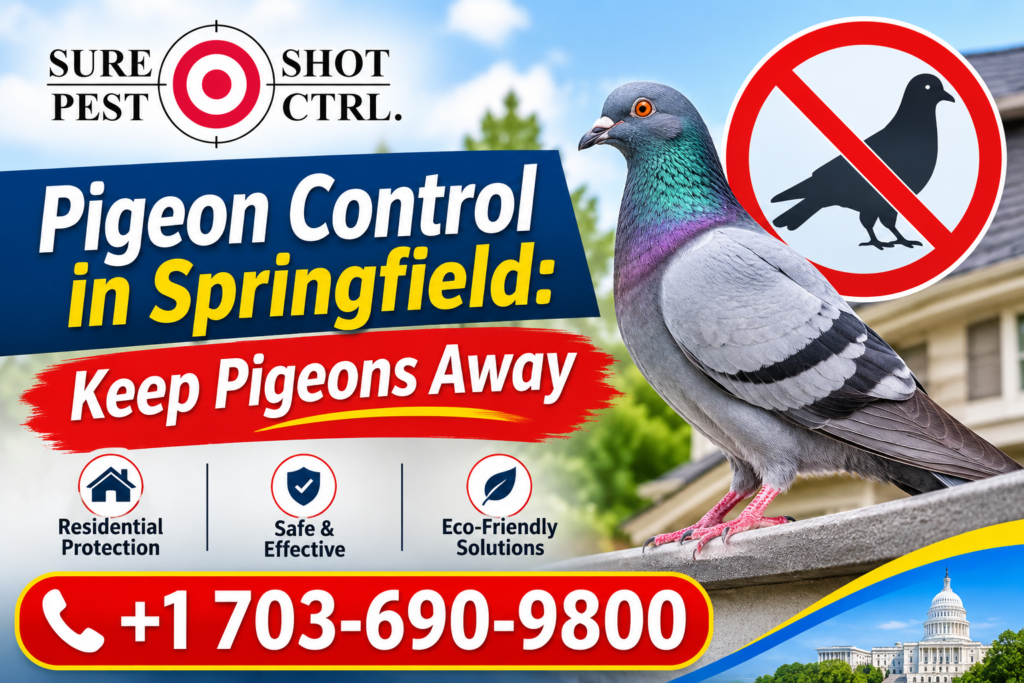
Successful pigeon management requires more than simply chasing birds away. If the original attraction remains, pigeons may return within a short period.
A property-specific control strategy generally combines exclusion, deterrents, sanitation, and ongoing maintenance.
Physical Bird Exclusion
Physical exclusion prevents pigeons from accessing places where they commonly roost or nest.
Depending on the building and the affected area, suitable options may include:
- Bird netting to restrict access to covered spaces and enclosed structures.
- Properly installed anti-roosting spikes on suitable ledges.
- Bird wire systems designed to discourage landing.
- Sealing appropriate openings and access points.
- Structural modifications that eliminate sheltered nesting spaces.
The right system depends on the building’s design, the number of birds, and the areas experiencing activity.
Bird Deterrents
Bird deterrents make particular locations less attractive for pigeons. Reflective materials, visual deterrents, and professionally selected bird-repellent products may help discourage roosting.
However, pigeons can become accustomed to stationary deterrents. Therefore, products should be selected and positioned according to the property’s conditions rather than relying on one universal solution.
Sanitation and Waste Management
Removing accessible food and water sources can reduce the reasons pigeons repeatedly visit a property.
Property owners should:
- Keep garbage containers covered.
- Clean outdoor dining and food preparation areas.
- Avoid leaving pet food outside.
- Remove standing water where practical.
- Maintain gutters and drainage systems.
- Address nesting and roosting conditions appropriately.
Sanitation works best when combined with physical exclusion and other prevention measures.
Nesting Area Management
Identifying and addressing nesting locations is essential for preventing recurring pigeon activity. However, property owners should avoid disturbing active nests without first checking applicable wildlife requirements.
A qualified professional can help evaluate the location and determine an appropriate course of action.
Why Professional Pigeon Inspection Matters
A professional pigeon inspection helps identify where birds enter, feed, nest, and gather. Without understanding these patterns, property owners may spend money on deterrents that fail to address the actual problem.
During an inspection, a qualified pest-control professional may evaluate:
- Roof lines and ledges: Identifying common landing and roosting locations.
- Balconies and exterior structures: Checking sheltered spaces where pigeons may establish nests.
- Gutters and drainage systems: Looking for accumulated nesting materials and droppings.
- Food and water sources: Identifying environmental conditions that attract birds.
- Previous control attempts: Evaluating why existing deterrents may not have worked.
An inspection also helps determine whether exclusion, sanitation, deterrents, or a combination of methods is appropriate.
For homeowners and commercial property managers, this assessment provides a more organized approach to managing pigeon problems.
Health and Safety Concerns Associated with Pigeon Droppings
One important reason to address large pigeon accumulations is the potential health risk associated with contaminated environmental material.
Bird droppings can contain microorganisms, and disturbing large, dried accumulations may release contaminated dust into the air.
The Centers for Disease Control and Prevention (CDC) explains that Histoplasma, a fungus associated with certain environmental materials containing bird or bat droppings, can cause histoplasmosis when airborne spores are inhaled.
This does not mean every pigeon dropping presents an infection risk. The concern is particularly important when large accumulations are disturbed during cleaning, construction, renovation, or maintenance.
For safer management:
- Avoid dry sweeping or brushing large accumulations.
- Do not use ordinary household equipment to disturb heavily contaminated material.
- Restrict access to heavily affected areas when appropriate.
- Seek professional assistance for substantial accumulations.
- Follow suitable protective equipment and waste-handling procedures.
The CDC recommends professional cleanup for large accumulations when specialized hazardous-material handling is needed.
DIY Pigeon Prevention vs. Professional Pigeon Control
Some pigeon problems can be reduced through basic property maintenance. However, persistent roosting and nesting activity may require a more comprehensive solution.
| DIY Prevention | Professional Pigeon Control |
| Cover garbage containers | Evaluate food and nesting attractions |
| Remove accessible food sources | Inspect recurring roosting locations |
| Maintain gutters and drainage | Recommend suitable exclusion systems |
| Use appropriate basic deterrents | Develop a property-specific control strategy |
| Monitor bird activity | Evaluate ongoing prevention needs |
DIY prevention is useful for reducing attractants, but it may not solve an established pigeon problem. A professional Inspection is particularly valuable when birds repeatedly return or when droppings have accumulated in difficult-to-reach locations.
How to Prevent Pigeons from Returning
Long-term pigeon prevention requires regular property maintenance and attention to the conditions that attract birds.
Springfield homeowners and business owners can take several practical steps:
Maintain building exteriors: Inspect roof edges, balconies, gutters, and other sheltered spaces for potential nesting locations.
Remove food attractions: Keep trash secured and avoid leaving food scraps or pet food outdoors.
Address water sources: Repair leaking faucets and eliminate unnecessary standing water.
Maintain exclusion equipment: Check installed bird netting, spikes, and wire systems for damage or gaps.
Schedule periodic inspections: Regular property checks can help identify new bird activity before it becomes a significant problem.
The most effective approach is prevention supported by consistent monitoring.
Choosing the Right Pigeon Control Company in Springfield
Selecting an experienced pigeon control company is important when bird activity becomes difficult to manage.
Before choosing a provider, consider whether the company offers a thorough inspection, explains the proposed control methods, and recommends solutions based on the building’s specific conditions.
A dependable provider should also explain how exclusion and prevention work together, discuss safety considerations, and provide realistic expectations about the results.
Sure Shot Pest is a resource for property owners looking to understand pest-control options and protect their homes and businesses. If pigeons are repeatedly gathering around your property, contacting a professional can be a useful first step toward identifying an appropriate solution.
FAQs About Pigeon Control in Springfield
1. How does pigeon control in Springfield work?
Pigeon control generally involves inspecting the property, identifying roosting and nesting locations, removing attractive food and water sources, and installing suitable exclusion or deterrent systems. The best approach depends on the building, the severity of bird activity, and the conditions attracting pigeons.
2. What is the most effective way to keep pigeons away?
Physical exclusion is often an important part of long-term pigeon prevention. Properly installed bird netting, anti-roosting spikes, and bird wire can discourage access to selected areas. Combining these measures with sanitation and regular maintenance generally provides better results than using visual deterrents alone.
3. Are pigeon droppings dangerous to humans?
Large accumulations of pigeon droppings can create sanitation and health concerns, particularly when dried material is disturbed and contaminated dust becomes airborne. Certain environmental fungi, including Histoplasma, can be associated with bird-dropping-contaminated environments. Large accumulations should be handled carefully.
4. Why should I hire a pigeon control company in Springfield?
A professional pigeon control company can inspect difficult-to-reach areas, identify recurring nesting locations, and recommend suitable exclusion and prevention methods. Professional guidance is especially useful for commercial buildings, persistent infestations, and properties with significant droppings or nesting materials.
Conclusion: Protect Your Springfield Property with Sure Shot Pest
Pigeon problems can affect the cleanliness, appearance, and maintenance of residential and commercial properties. From droppings and nesting materials to blocked drainage and recurring roosting, unwanted pigeon activity should be addressed before it becomes more difficult to manage.
Effective pigeon control in Springfield starts with understanding why pigeons are attracted to a property. Combining professional inspection, physical exclusion, sanitation, and regular maintenance can help reduce bird activity and discourage pigeons from returning.
Sure Shot Pest encourages property owners to take a proactive approach to pest management. If pigeons are creating problems around your home or business, visit Sure Shot Pest to learn more and explore your pest-control options.
Protect your property by addressing pigeon problems early and choosing prevention strategies suited to your building.