
A Rodent Control Company can help identify, remove, and prevent rats and mice before an infestation causes larger problems. In Springfield, rodents may enter homes and businesses through small openings, garages, crawl spaces, attics, wall voids, and other areas that provide food, water, and shelter.
Seeing a mouse, hearing scratching inside a wall, or discovering droppings does not always reveal the full extent of an infestation. Rodents can remain hidden while nesting and reproducing. A professional inspection helps determine where activity is occurring, how rodents are entering the property, and which control measures are appropriate.
Sure Shot Pest provides rodent control services designed around inspection, identification, exclusion, treatment, and prevention. The goal is not simply to address visible rodents but to identify the conditions allowing them to remain on the property.
Why Rodent Control Matters
Rats and mice can create several problems inside residential and commercial properties. They can contaminate food and surfaces with urine and droppings, damage stored materials, chew insulation, and gnaw electrical wiring.
Virginia Department of Health notes that rodents can spread disease through contact with contaminated urine, droppings, saliva, food, water, and dust containing dried waste. The department also recommends sealing openings, reducing food sources, and addressing nesting areas.
Rodent activity can also increase quickly when food and shelter are readily available. This is why treating only the rodents that are currently visible may not address the conditions supporting an infestation.
A practical rodent control plan should address three areas:
- Identify current rodent activity.
- Remove or block access points.
- Reduce food, water, and shelter that attract rodents.
Signs You May Need Rodent Control
Rodents are often active when people are asleep or when a building is quiet, so the first signs may be indirect.
Common indicators include:
Droppings: Small dark droppings around cabinets, pantries, garages, utility areas, or along walls can indicate rodent activity.
Scratching sounds: Noises inside ceilings, walls, attics, or crawl spaces may indicate rodents moving or nesting.
Gnaw marks: Rodents may chew wood, plastic, cardboard, insulation, food packaging, and electrical wiring.
Nesting material: Shredded paper, insulation, fabric, cardboard, or other soft materials can be used to build nests.
Grease or rub marks: Rodents may leave dark marks along frequently traveled areas as their bodies repeatedly contact walls or surfaces.
Unusual odors: A persistent musky smell can sometimes indicate an active infestation or a hidden nest.
Live or dead rodents: Seeing a mouse or rat during the day can be a reason to investigate further, particularly when other signs are present.
If several of these signs appear together, scheduling an inspection can help determine the next step.
What Happens During a Rodent Inspection?
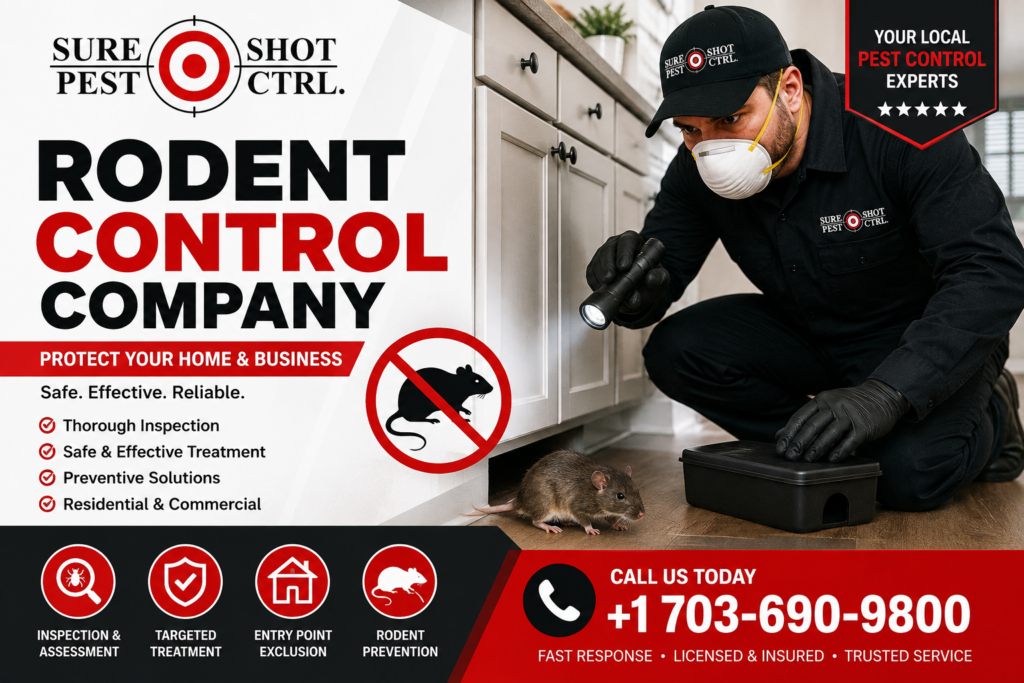
A proper rodent control inspection should go beyond looking for visible mice or rats.
A pest management professional may examine areas such as the attic, basement, garage, crawl space, kitchen, utility areas, exterior foundation, doors, vents, roof-line, and other potential entry points.
The inspection typically looks for:
- Droppings and urine staining
- Gnaw marks
- Nesting materials
- Entry holes and structural gaps
- Food and water sources
- Travel routes
- Areas of previous rodent activity
- Conditions that may encourage nesting
Small openings deserve particular attention. Virginia Department of Health states that mice can enter through openings as small as a dime and recommends sealing openings to help prevent rodents from entering homes.
The inspection findings help determine whether the property needs trapping, exclusion work, sanitation improvements, monitoring, or a combination of control measures.
How Rodent Control Works
Effective Rodent Control is usually more than placing a trap and leaving.
The EPA describes integrated pest management, or IPM, as an approach that combines prevention with appropriate control methods and uses pesticides only when needed.
For a residential or commercial property, a rodent management plan may include several steps.
1. Inspection
The first step is determining where rodents are active and how they are accessing the property.
2. Identification
Mice and rats have different behaviors, sizes, nesting habits, and entry patterns. Identifying the type of rodent can help determine the appropriate control strategy.
3. Exclusion
Entry points around foundations, doors, pipes, vents, utility lines, and other structural areas should be identified and addressed where appropriate.
4. Trapping or Baiting
Depending on the property and infestation, traps or professionally managed bait stations may be used. The EPA advises that rodent baits used around homes should be placed in tamper-resistant bait stations and kept inaccessible to children and pets.
5. Sanitation and Prevention
Removing accessible food, securing garbage, reducing clutter, and eliminating potential nesting areas can make the property less attractive to rodents.
6. Monitoring
Follow-up monitoring can help determine whether rodent activity has decreased and whether additional entry points or attractants need attention.
Why DIY Rodent Control May Not Be Enough
Homeowners can take useful prevention steps, but recurring rodent activity can be difficult to resolve when the source is hidden.
A trap may catch one mouse without addressing an opening through which additional rodents are entering. Similarly, removing a visible nest does not necessarily eliminate the conditions that allowed rodents to establish themselves.
The EPA recommends preventing access, maintaining clean living spaces, and eliminating potential nesting areas as important parts of rodent management.
For recurring activity, a professional inspection can provide a more complete picture of the property and help identify areas that may otherwise be overlooked.
How to Choose a Rodent Control Company
Choosing a Rodent Control Company should involve more than comparing prices.
Consider whether the company:
- Provides a detailed inspection.
- Explains where rodent activity was found.
- Identifies possible entry points.
- Discusses prevention as well as treatment.
- Uses control products according to applicable label directions.
- Provides information about follow-up or monitoring.
- Can provide appropriate licensing information.
The EPA specifically recommends asking to see a pest control company’s license and contacting the relevant state pesticide regulatory agency if you have concerns.
For Springfield property owners, choosing a company familiar with local residential and commercial property conditions can also make the inspection and prevention process more practical.
Preventing Rats and Mice in Springfield
Rodent prevention begins with making your property less accessible and attractive.
Store food, pet food, and animal feed in sealed containers. Keep garbage containers closed and clean up food waste promptly. Reduce unnecessary clutter in garages, basements, storage spaces, and around exterior structures.
Check the outside of the property for cracks and gaps around doors, windows, pipes, vents, foundations, and utility openings. Keep vegetation and stored materials from creating sheltered areas immediately next to the structure.
Virginia Department of Health also recommends reducing food sources, sealing openings, keeping unnecessary storage away from buildings, and storing firewood or lumber off the ground and away from the home.
These simple measures can support a broader rodent management plan and reduce the opportunity for mice and rats to establish nesting areas.
When Should You Call a Rodent Control Company?
You should consider contacting a Rodent Control Company when you repeatedly see rodents, find fresh droppings, hear activity inside walls or ceilings, discover nesting material, notice new gnaw marks, or continue finding signs after attempting basic prevention.
You should also consider an inspection if you recently moved into a property with a history of rodent problems or if rodents are entering from an area that is difficult to access.
Early attention can make it easier to identify entry points and correct conditions before rodent activity becomes more established.
Why Choose Sure Shot Pest?
Sure Shot Pest focuses on practical pest management for property owners dealing with unwanted rodent activity. A rodent issue deserves attention to both the immediate signs and the conditions that may be allowing the problem to continue.
The process can begin with an inspection to identify evidence of mice or rats, potential entry points, nesting areas, and attractants. From there, appropriate control and prevention measures can be recommended based on the property.
This inspection-first approach aligns with modern integrated pest management principles, which emphasize understanding the pest problem and using appropriate prevention and control methods rather than relying on unnecessary pesticide applications.
FAQ
What does a rodent control company do?
A rodent control company identifies signs of mice or rats, locates potential entry points, assesses food and nesting conditions, and recommends appropriate control measures. Depending on the situation, services may include inspection, trapping, exclusion, bait-station management, sanitation recommendations, and follow-up monitoring.
How does a rodent control company inspect a property?
A Rodent Control Company may inspect interior and exterior areas where rodents commonly travel or nest, including attics, garages, crawl spaces, kitchens, utility areas, foundations, vents, doors, and other openings. The inspection looks for droppings, gnaw marks, nesting material, travel routes, and possible entry points.
How can I prevent mice and rats from entering my Springfield home?
Seal gaps around the foundation, doors, windows, pipes, vents, and utility openings. Store food and pet food in sealed containers, keep garbage closed, remove food waste, reduce clutter, and limit sheltered areas around the structure. These measures can make the property less attractive and accessible to rodents.
Is professional rodent control safer than using poison myself?
Professional service can help ensure that control measures are selected and used appropriately for the property. The EPA recommends following product labels and using tamper-resistant bait stations when rodenticide is appropriate around homes. Keeping bait inaccessible to children and pets is especially important.
Conclusion: Get a Rodent Inspection in Springfield
Rodent problems rarely begin with the first mouse or rat you see. Hidden entry points, accessible food, nesting areas, and structural gaps can allow rodents to remain active even after visible signs disappear.
A reliable Rodent Control Company can help identify the source of the problem, evaluate the property, address rodent activity, and recommend prevention measures.
If you are seeing signs of mice or rats in your Springfield home or business, contact Sure Shot Pest to discuss a rodent inspection and appropriate control options.