
Introduction
Mold Removal in Springfield is an important consideration for homeowners and property managers who notice musty odors, damp walls, water stains, or unexplained mold growth inside their properties. Mold can develop in bathrooms, basements, kitchens, crawl spaces, and other areas where moisture remains for extended periods.
In Springfield, Virginia, seasonal humidity, heavy rainfall, plumbing leaks, and water intrusion can create conditions that allow indoor mold to grow. Recognizing the warning signs early can help property owners address moisture problems before they lead to more extensive damage.
This guide from Sure Shot Pest explains what causes indoor mold, how to recognize a potential problem, what happens during a mold inspection, and when professional mold removal may be appropriate.
What Is Mold and Why Does It Grow Indoors?
Mold is a type of fungus that reproduces through microscopic spores. These spores naturally exist in the indoor and outdoor environment. Problems develop when spores settle on damp surfaces and find suitable conditions for growth.
Common indoor locations include bathroom walls, window frames, drywall, wooden surfaces, carpets, ceiling tiles, and areas beneath sinks.
The U.S. Environmental Protection Agency (EPA) emphasizes that controlling moisture is the foundation of effective mold management. Cleaning visible mold without correcting the underlying water problem may allow it to return.
Several conditions can encourage mold growth:
- Leaking pipes or plumbing fixtures.
- Roof leaks and damaged window seals.
- Poor bathroom or kitchen ventilation.
- High indoor humidity and condensation.
- Flooding or water-damaged flooring.
- Damp basements, crawl spaces, and poorly ventilated storage areas.
Identifying the moisture source is just as important as addressing the visible mold.
Common Signs You May Need Mold Removal in Springfield
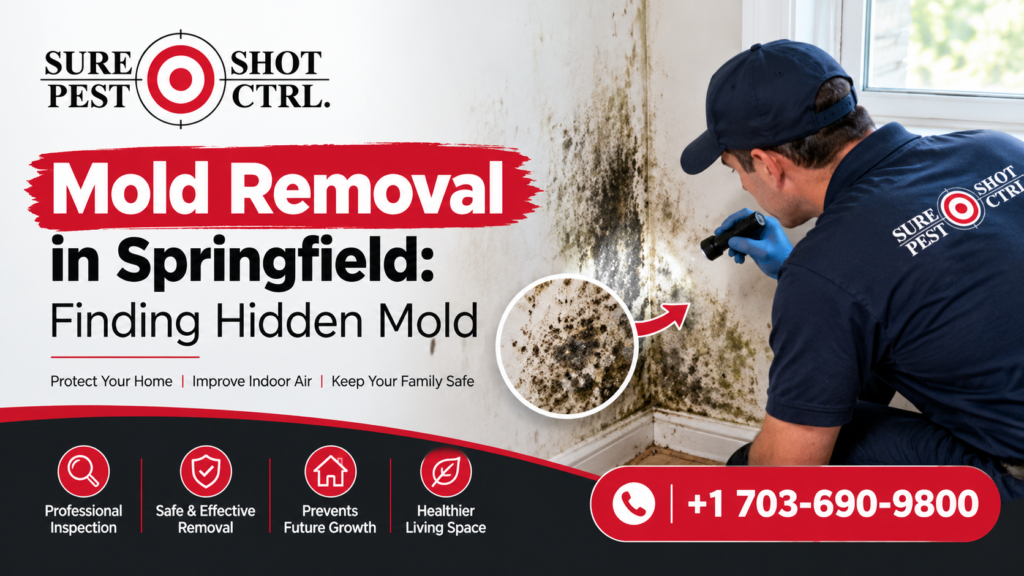
Mold is not always immediately visible. It can grow behind wallpaper, beneath carpets, inside wall cavities, or around plumbing connections. Knowing what to look for can help you decide when to investigate further.
A persistent musty smell may indicate moisture or hidden mold, particularly when it becomes noticeable after entering a basement, bathroom, or closed room. Odors alone cannot confirm mold, but they can be a reason to investigate.
1. Dark Spots on Walls and Ceilings
Mold can appear as black, green, brown, gray, or white patches. It may develop around windows, on bathroom grout, near ceiling leaks, or along the edges of damp flooring.
Color alone cannot reliably identify a mold species or determine its potential health effects.
2. Water Stains and Peeling Paint
Discolored ceilings, bubbling paint, warped baseboards, and peeling wallpaper can indicate moisture damage. Even if the surface appears dry, water may remain inside the wall or ceiling.
3. Repeated Condensation
Regular condensation on windows, cold pipes, and exterior walls can signal excess indoor humidity. If the moisture is not addressed, nearby materials may become suitable for mold growth.
4. Allergy-Like Symptoms Indoors
Exposure to damp or moldy environments may contribute to coughing, wheezing, nasal congestion, irritated eyes, or skin irritation in some people. These symptoms have many possible causes and cannot establish that mold is responsible.
The Centers for Disease Control and Prevention (CDC) recommend reducing exposure to mold and correcting moisture problems. Anyone experiencing persistent or concerning symptoms should consult a qualified healthcare professional.
What Causes Mold Problems in Springfield, Virginia?
Local weather and building conditions can influence indoor moisture, although mold can develop in any region when suitable conditions exist.
During humid periods, moisture can accumulate in poorly ventilated rooms. Heavy rainfall may expose roof defects, foundation seepage, and drainage problems. Cold-weather condensation can also develop when warm indoor air meets cold surfaces.
Homes with basements, crawl spaces, older plumbing, or previous water damage may require particular attention to moisture control.
Property owners should regularly check under sinks, around water heaters, near washing machines, along basement walls, and around windows. After heavy rain, look for damp flooring, water stains, or unusual odors.
For rental properties and commercial buildings, routine maintenance and prompt reporting of leaks can help prevent minor moisture problems from becoming more extensive.
How Does a Professional Mold Inspection Work?
A mold inspection helps identify visible growth, moisture conditions, and potential areas of concern. The appropriate inspection method depends on the building, the history of water damage, and the suspected location of the problem.
A qualified inspector or remediation professional may begin by asking about previous leaks, flooding, condensation, and recurring odors.
Visual Assessment
The professional examines accessible surfaces for discoloration, water stains, peeling materials, and visible mold. Areas near plumbing fixtures, windows, ceilings, and basement walls may receive particular attention.
Moisture Investigation
Moisture meters and other appropriate equipment may help identify damp building materials. Thermal imaging can sometimes reveal temperature patterns associated with moisture, but it does not independently confirm the presence of mold.
Investigating Hidden Areas
When evidence suggests concealed moisture, further investigation may be appropriate. Opening walls or other building materials should be considered carefully to avoid unnecessary damage and exposure.
Is Mold Testing Always Necessary?
No. The CDC does not recommend routine mold testing for every home. When visible mold is present, identifying the exact species is usually less important than removing the growth and correcting the moisture source.
Air or surface sampling may be useful in certain circumstances when a qualified professional can explain how the findings will inform the investigation. However, there is no universally accepted indoor mold-spore threshold that determines whether a home is safe.
For additional guidance, consult the CDC’s mold information and the EPA’s mold inspection and cleanup resources.
When Should You Hire a Mold Removal Specialist?
Small patches of mold on accessible, nonporous surfaces may sometimes be cleaned by a homeowner. Larger or more complicated problems require greater caution.
The EPA states that areas of mold growth exceeding approximately 10 square feet generally warrant consultation of its more comprehensive remediation guidance. This is a practical guideline rather than a guarantee that every smaller area is safe to handle independently.
Consider professional assistance when:
- Mold covers a large area or repeatedly returns after cleaning.
- Water damage affects drywall, insulation, ceilings, or flooring.
- Mold may be present inside walls or ventilation systems.
- The affected area involves sewage or contaminated floodwater.
- A persistent moisture problem cannot be identified or corrected.
- Occupants have health concerns that make cleanup exposure particularly risky.
People with asthma, mold allergies, chronic lung disease, or weakened immune systems should avoid participating in mold cleanup when possible.
When choosing a Springfield company, ask about experience with mold-related moisture problems, the proposed cleanup process, containment measures where appropriate, material removal, drying methods, and how the underlying moisture source will be addressed.
It is also sensible to request a written scope of work and verify references and relevant credentials before hiring a contractor.
What Does Mold Removal Involve?
The appropriate mold removal process depends on the affected materials, the size of the area, and the source of moisture.
Step 1: Identify and Correct the Moisture Source
The first priority is to stop the leak, improve drainage, repair damaged seals, or address excessive humidity. Without this step, mold may return even after visible growth has been removed.
Step 2: Protect the Surrounding Area
For larger projects, professionals may use containment and appropriate protective equipment to limit the spread of dust and mold-contaminated material. The measures required depend on the extent and location of the contamination.
Step 3: Remove Mold and Affected Materials
Hard surfaces may often be cleaned with detergent and water, followed by thorough drying. Porous materials such as moldy drywall, insulation, and ceiling tiles may need removal because growth can extend into areas that cannot be cleaned effectively.
The cleanup method should suit the material and conditions. Applying a chemical product alone does not remove all mold-contaminated material or solve the underlying moisture problem.
Step 4: Dry the Area Completely
Affected materials should be dried thoroughly, and the source of excessive humidity should be corrected. After water damage, the EPA recommends drying wet materials within 24–48 hours when possible, to help prevent mold growth.
Step 5: Check for Remaining Moisture
Before rebuilding or repainting, confirm that the affected area is dry and the original moisture problem has been addressed. Painting over visible mold is not a substitute for proper cleanup.
A professional should explain which materials can be cleaned, which need replacement, and whether additional moisture investigation is necessary.
How to Prevent Mold from Returning
Preventive maintenance is often less expensive and disruptive than dealing with recurring water damage.
The CDC recommends keeping indoor humidity no higher than 50% when possible. A humidity monitor, air conditioner, or dehumidifier can help maintain appropriate conditions.
Homeowners can also follow these practical steps:
- Repair plumbing and roof leaks promptly.
- Use bathroom and kitchen exhaust fans that vent outdoors.
- Keep gutters and drainage systems clear.
- Improve ventilation in damp rooms.
- Check basements and crawl spaces after heavy rain.
- Dry wet materials within 24–48 hours whenever possible.
- Avoid storing cardboard and fabric directly against damp basement walls.
- Investigate persistent condensation and musty odors instead of masking them.
These measures help reduce the moisture that mold needs to grow. They are useful for homes, rental properties, offices, and other buildings in Springfield.
Choosing a Springfield Company for Mold-Related Concerns
When researching a Springfield company for mold-related services, look beyond advertising claims. A reliable provider should explain the limits of its inspection, identify the suspected moisture source, and recommend appropriate next steps.
Ask whether the provider performs mold remediation directly or coordinates with a separate remediation contractor. Pest control, mold inspection, water damage restoration, and mold remediation are distinct services, and not every company provides all of them.
Sure Shot Pest encourages property owners to investigate moisture problems promptly and seek the appropriate qualified professional when mold or water damage is suspected. Confirm the company’s current service offerings before arranging an inspection or requesting remediation.
A clear explanation of the problem, a practical plan for correcting moisture, and transparent communication are useful starting points when deciding how to care for your property.
FAQs
1. How do I know if I need mold removal in Springfield?
You may need further investigation if you notice visible mold, persistent musty odors, water stains, peeling paint, or repeated moisture problems. Hidden mold is also possible after leaks or flooding. A qualified professional can assess the affected area and help determine the appropriate cleanup and moisture-control measures.
2. How much does mold removal cost in Springfield, VA?
The cost depends on the affected area, the materials involved, the source of moisture, and whether hidden damage or material replacement is necessary. A small surface cleanup may cost considerably less than extensive remediation. Request an inspection and a written estimate that explains the proposed work.
3. Can I remove mold myself, or should I hire a mold removal specialist?
Small areas of mold on hard surfaces may be manageable with appropriate precautions. Larger growth, contaminated water, hidden moisture, HVAC concerns, and damaged porous materials can require professional help. People with asthma, mold allergies, or weakened immune systems should avoid cleanup exposure whenever possible.
4. How can I prevent mold from returning after mold removal in Springfield?
Correct the original leak or moisture source, dry affected materials thoroughly, improve ventilation, and keep indoor humidity at or below 50% when possible. Check damp areas regularly and address condensation promptly. Cleaning visible mold without correcting the underlying moisture problem may allow the growth to return.
Conclusion: Take the Right Steps Toward a Mold-Free Property
Mold problems often begin with something easy to overlook: a small plumbing leak, poor ventilation, condensation, or water that was not dried promptly. Recognizing the warning signs and addressing moisture early can help limit building damage and reduce continued exposure to damp, moldy environments.
Effective Mold Removal in Springfield involves more than cleaning visible spots. It requires identifying the source of moisture, selecting suitable cleanup methods, drying affected materials, and taking steps to prevent recurrence.
Sure Shot Pest encourages homeowners and property managers to take musty odors, visible mold, and repeated water damage seriously. If you suspect a mold problem, investigate the source promptly and contact an appropriately qualified professional for inspection or remediation when needed.