
Mold Removal in Springfield becomes important when you notice musty odors, dark or discolored spots, recurring dampness, or visible mold after a leak or water event. Mold commonly develops where moisture remains for too long, including bathrooms, basements, crawl spaces, around windows, under sinks, and near plumbing.
The key to effective mold control is not simply removing what you can see. The underlying moisture problem must also be identified and corrected. The U.S. Environmental Protection Agency (EPA) explains that controlling moisture is central to controlling indoor mold, and damp materials should be dried quickly to reduce the opportunity for mold growth.
For Springfield homeowners, understanding when to clean a small area yourself and when to contact a Mold Removal specialist can help prevent a minor moisture issue from becoming a larger property problem.
What Causes Mold Growth in Springfield Homes?
Mold needs moisture, an organic food source, and suitable environmental conditions to grow. A small plumbing leak, roof issue, condensation problem, flooding event, or poorly ventilated bathroom can create the conditions mold needs.
Common sources include:
- Leaking pipes or faucets
- Roof or gutter leaks
- Basement or crawl-space moisture
- Bathroom condensation
- Poor ventilation
- HVAC condensation
- Flooding or water intrusion
- Wet carpet, drywall, wood, or insulation
- High indoor humidity
According to the CDC, mold can grow on materials such as drywall, wood, carpet, upholstery, paper, and ceiling tiles when moisture is present.
This is why simply wiping away visible mold may not solve the problem. If the moisture source remains, mold can return.
Signs You May Need Mold Removal in Springfield
Mold is not always immediately visible. Sometimes the first indication is an unusual smell or recurring moisture.
Watch for these warning signs:
Musty odors: A persistent earthy or musty smell can indicate mold growth, particularly in enclosed spaces.
Visible discoloration: Mold may appear in different colors and patterns on walls, ceilings, wood, caulk, carpet, or other materials.
Recurring dampness: Water stains, condensation, peeling paint, or soft drywall can indicate an ongoing moisture issue.
After-water-damage growth: Mold can develop following flooding, plumbing failures, roof leaks, or other water events.
Repeated respiratory irritation: Indoor mold exposure can be associated with allergic reactions, asthma symptoms, and respiratory complaints. The CDC notes that individual responses to mold can vary.
If these signs appear repeatedly, arranging a professional inspection can help determine the extent and likely source of the problem.
How Does a Mold Inspection Work?
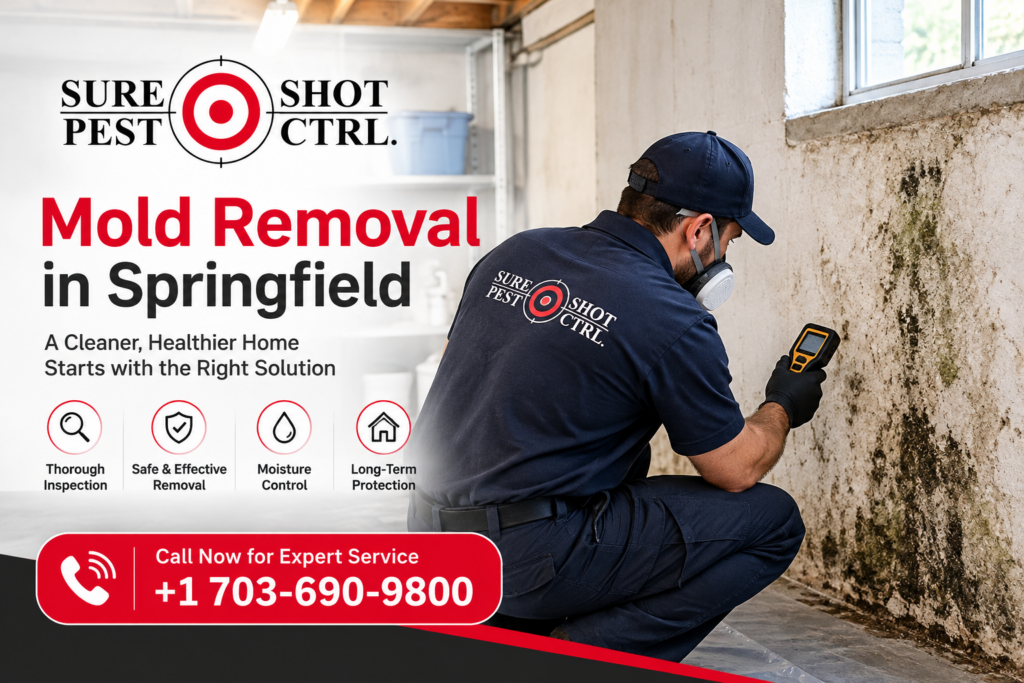
A Mold Removal Company may begin with an inspection to understand where moisture and visible growth are located.
A practical inspection can include:
1. Visual Assessment
The inspector examines accessible areas for visible mold, water stains, condensation, damaged materials, and other indicators of moisture.
2. Moisture Investigation
Moisture meters or other tools may be used to identify damp areas that are not obvious from a visual inspection.
3. Source Identification
The important question is not only where mold is located, but why it is growing. The source could be a plumbing leak, roof issue, condensation, drainage problem, or another moisture condition.
4. Extent Assessment
The affected area and building materials are evaluated to determine whether the issue appears limited or more extensive.
5. Cleanup Recommendations
Based on the findings, a Mold Removal specialist can explain which materials may be cleaned and which porous materials may need replacement.
It is also important to understand that mold testing is not always necessary. The CDC states that it does not recommend routine home mold testing because testing does not determine whether someone will become sick, and there are no established standards for acceptable quantities of different molds inside homes.
When Should You Hire a Mold Removal Specialist?
Small areas of mold on hard surfaces can sometimes be addressed by homeowners using appropriate precautions. EPA guidance indicates that areas of less than approximately 10 square feet can often be handled by homeowners, while larger areas or situations involving significant water damage may warrant professional assistance.
Professional Mold Removal in Springfield may be appropriate when:
- Mold covers a large area.
- Water damage is extensive.
- Mold keeps returning after cleaning.
- Mold may be hidden behind walls or other materials.
- Porous materials are heavily affected.
- Sewage or contaminated water caused the damage.
- An HVAC system may be contaminated.
- You are unsure how extensive the problem is.
- Someone in the household has health concerns related to mold exposure.
The EPA recommends considering experienced professionals for larger mold problems and checking their experience and references before hiring them.
What Does Mold Removal Involve?
A professional Mold Removal process generally focuses on removing affected materials, cleaning appropriate surfaces, and correcting the moisture source.
The exact process depends on the building and extent of contamination, but it may involve:
Containment: Steps may be taken to reduce the movement of dust or mold-contaminated material into unaffected areas.
Removal of damaged materials: Some porous materials, including certain carpets, ceiling tiles, or drywall, may be difficult to clean completely once heavily affected.
Surface cleaning: Hard, nonporous surfaces can generally be cleaned using appropriate cleaning methods.
Moisture correction: Leaks, condensation, drainage problems, or other moisture sources need to be addressed.
Drying: Affected areas should be dried thoroughly.
Follow-up inspection: The area should be checked after cleanup to identify remaining moisture or visible mold.
EPA guidance emphasizes that cleaning mold without correcting the water problem can allow the mold problem to return.
Can You Remove Mold Yourself?
For a small, isolated area, homeowners may be able to perform cleanup themselves. However, proper precautions matter.
The CDC recommends protective equipment such as gloves, eye protection, and at least a NOSH-approved N95 respirator for mold cleanup. People with allergies, immune suppression, underlying lung disease, asthma, or certain respiratory conditions may face greater risks during cleanup and should take appropriate precautions.
For larger areas, extensive water damage, contaminated water, or suspected HVAC contamination, professional assistance is generally more appropriate.
Never mix bleach with ammonia or other cleaning products. The CDC warns that doing so can produce dangerous vapors.
How to Prevent Mold After Removal
Effective Mold Removal is only part of the solution. Prevention depends heavily on moisture management.
Keep indoor humidity under control. EPA guidance recommends keeping relative humidity below 60%, ideally between 30% and 50%.
Other useful prevention measures include:
- Repair plumbing leaks quickly.
- Address roof and gutter problems.
- Use bathroom exhaust fans.
- Keep air-conditioning drain pans and lines maintained.
- Use a dehumidifier in damp areas.
- Dry wet materials as quickly as possible.
- Improve ventilation in moisture-prone rooms.
- Watch for condensation around windows and pipes.
- Keep water away from the foundation.
- Check basements and crawl spaces periodically.
After flooding or significant water intrusion, EPA and CDC guidance emphasizes rapid drying, with 24–48 hours being an important time-frame for reducing mold growth opportunities.
Why Choose a Professional Mold Removal Company in Springfield?
Choosing a qualified company can be useful when the source or extent of mold is difficult to determine. A professional approach should focus on more than visible cleaning.
When comparing a Mold Removal Company, ask about:
- Experience with residential mold problems
- Inspection procedures
- Moisture detection
- Cleanup methods
- Handling of porous materials
- Water-damage experience
- Follow-up procedures
- References or relevant professional credentials
A trustworthy service should explain what it found, what needs to be addressed, and why particular cleanup steps are recommended rather than simply offering a one-size-fits-all treatment.
FAQs
1. What is the first step in Mold Removal in Springfield?
The first step is identifying the moisture source and assessing the affected area. Mold can return if a leak, condensation problem, flooding issue, or other moisture source remains unresolved. EPA guidance emphasizes moisture control as the foundation of effective mold management.
2. Is Mold Removal in Springfield necessary for a small mold spot?
Not necessarily. Small areas may sometimes be cleaned by homeowners when the source of moisture is corrected and appropriate safety precautions are followed. EPA generally identifies approximately 10 square feet as a useful threshold for considering whether professional assistance is appropriate.
3. Should I get a mold inspection before removal?
An inspection can be helpful when the source, location, or extent of mold is unclear. However, the CDC does not recommend routine home mold testing. Visible mold or a confirmed moisture problem can often provide enough information to begin appropriate cleanup.
4. How can I prevent mold from coming back?
Control moisture, repair leaks, improve ventilation, reduce excessive humidity, and dry wet materials quickly. EPA recommends keeping indoor relative humidity below 60%, ideally between 30% and 50%, while CDC guidance emphasizes fixing leaks and drying wet areas within 24–48 hours when possible.
Conclusion: Address Mold Before It Spreads
Mold is fundamentally a moisture problem. Whether the issue begins with a plumbing leak, condensation, flooding, roof damage, or excessive humidity, removing visible growth without addressing the underlying moisture can allow the problem to return.
For homeowners searching for Mold Removal in Springfield, the right approach starts with identifying the source, assessing the affected area, using safe cleanup practices, and taking steps to control future moisture.
If you notice persistent mold, musty odors, recurring water damage, or suspected hidden growth, consider contacting Sure Shot Pest for information about inspection and mold removal options in Springfield.