
Introduction
Termite Inspection in Springfield is an important step for homeowners who want to identify termite activity before it leads to extensive structural damage. Termites can remain hidden inside wood, behind walls, and beneath flooring for long periods, making an infestation difficult to recognize without a careful inspection.
In Springfield, Virginia, changing seasonal conditions and moisture around residential properties can create conditions that support termite activity. Knowing the warning signs, understanding how inspections work, and addressing conditions that attract termites can help homeowners make informed decisions about their property.
Sure Shot Pest helps homeowners understand pest concerns and explore appropriate inspection and treatment options. Whether you have noticed damaged wood, discarded termite wings, or mud tubes near your foundation, arranging a professional inspection can help clarify what is happening and what steps may be needed.
Why Is Termite Inspection Important?
A termite inspection is a visual assessment of accessible areas of a property to look for evidence of termite activity, conditions that may attract termites, and possible wood damage. It helps determine whether further evaluation or treatment may be necessary.
Termites feed on cellulose, a material found in wood, paper, cardboard, and other plant-based products. Because they can consume wood from the inside, the exterior surface may look normal even when damage has developed internally.
A timely inspection can help homeowners:
- Identify visible signs of termite activity.
- Discover moisture conditions that may encourage termites.
- Assess accessible wooden structures for potential damage.
- Understand whether professional treatment or additional evaluation is appropriate.
- Plan preventive maintenance around the home.
An inspection does not automatically mean termites are present. Its purpose is to assess available evidence and help determine the appropriate next step.
Common Signs of Termites in Springfield Homes
Recognizing early warning signs can help homeowners decide when to contact a termite inspection specialist. Several indicators deserve attention, although some can resemble damage caused by other pests or moisture.
1. Mud Tubes Near the Foundation
Subterranean termites commonly build narrow mud tubes along foundations, concrete walls, and other surfaces. These tubes help them maintain moisture while traveling between their colony and a food source.
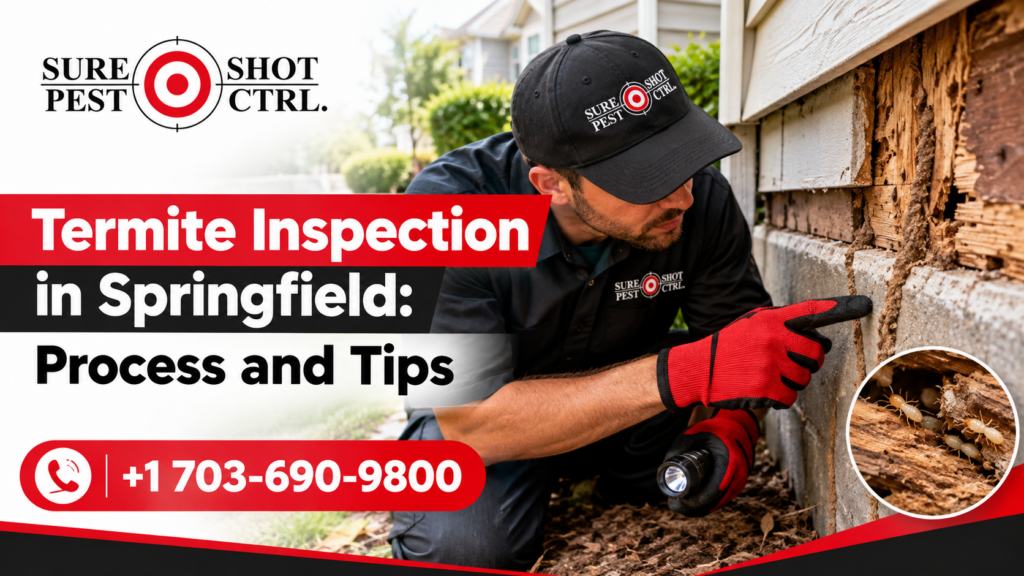
Look for thin, earth-colored tunnels around foundation walls, crawl spaces, basement areas, and places where wooden structures meet masonry.
Avoid assuming that an old or inactive-looking tube means the problem has ended. A professional assessment can help determine whether termite activity is current.
2. Discarded Wings Near Windows and Doors
Reproductive termites, often called swarmer’s, leave their colonies to establish new colonies. After swarming, they may shed their wings, leaving small, similar-sized wings on windowsills, floors, or near exterior doors.
Finding discarded wings indoors can indicate a nearby termite colony or an entry point. However, winged ants can look similar, so identification matters.
3. Hollow or Damaged Wood
Wood that sounds hollow when tapped, appears blistered, or breaks easily may warrant further investigation. Subterranean termites often consume wood internally, sometimes leaving a thin outer layer.
Not every damaged wooden surface indicates termites. Water damage, decay, and other wood-destroying organisms can cause similar symptoms.
4. Doors and Windows That Suddenly Stick
Termite activity is not the only explanation for sticking doors or windows. Seasonal humidity, wood expansion, and foundation movement can also cause these issues.
However, if sticking occurs alongside mud tubes, damaged wood, or discarded wings, arranging an inspection is sensible.
5. Unexplained Wood Damage or Frass
Drywood termites can leave small fecal pellets called frass near infested wood. Subterranean termites typically leave different evidence, such as mud tubes and concealed galleries.
Finding unexplained material near wooden trim, furniture, or structural components is a reason to seek professional identification rather than assuming every pile of debris is termite-related.
What Happens During a Professional Termite Inspection?
A professional termite inspection involves examining accessible areas for evidence of termite activity, damage, and environmental conditions that may contribute to an infestation. The exact scope depends on the building, accessibility, and purpose of the inspection.
Exterior Inspection
The inspector may examine the foundation, siding, entry points, drainage conditions, landscaping, and areas where soil contacts wood. Particular attention may be given to mud tubes, wood-to-ground contact, and moisture near the structure.
Interior Inspection
Inside the property, accessible areas such as basements, utility rooms, garages, window frames, door frames, and wooden trim may be checked for signs of termite activity or damage.
Crawl Spaces and Other Accessible Areas
Where access is available, crawl spaces and other relevant areas may be examined for moisture, wood deterioration, and termite evidence. Concealed spaces that cannot be safely or practically accessed may require further evaluation.
Findings and Recommendations
After the inspection, the homeowner should receive an explanation of the observations and recommended next steps. Depending on the findings, these may include monitoring, moisture correction, additional evaluation, or a treatment plan.
If you need documentation for a real estate transaction, ask in advance whether the inspection meets the requirements of the intended transaction and whether a written wood-destroying insect report is available.
Why Springfield Homeowners Should Pay Attention to Termites
Springfield is part of Northern Virginia, where subterranean termites are a relevant concern for residential properties. Termite risk depends on the property itself, including soil conditions, drainage, moisture, construction materials, and access to cellulose.
Homes with persistent plumbing leaks, damp crawl spaces, poor drainage, or untreated wood touching soil may have conditions that increase the likelihood of termite activity.
Older properties can have hidden areas that deserve attention, but newer homes are not automatically free from risk. Termites may access structures through foundation gaps, expansion joints, or other concealed routes.
Seasonal swarming can make termite activity more noticeable during warmer months, but a lack of visible swarmers does not prove a property is termite-free.
For these reasons, a termite inspection in Springfield should consider the property’s actual conditions rather than relying only on its age or the time of year.
How to Prepare for a Termite Inspection
Homeowners can make an inspection more productive by preparing the areas they know may need attention.
Move stored items away from accessible foundation walls where practical, clear pathways to utility rooms and crawl-space entrances, and note any locations where you have seen wings, mud tubes, or damaged wood.
Tell the inspector about recurring leaks, previous termite treatments, repairs to wooden structures, and any earlier pest reports. This information can help put visible evidence into context.
Do not disturb suspected termite galleries or apply pesticides before the inspection unless directed by a qualified professional. Altering the evidence can make it harder to assess the situation accurately.
Termite Prevention Tips for Springfield Properties
Prevention focuses on reducing moisture, limiting termite access to wood, and identifying potential problems before they become extensive.
Manage Moisture Around the Home
Repair leaking pipes, maintain gutters, and direct downspouts away from the foundation. Correct drainage problems that leave soil consistently wet near the building. Where appropriate, improve ventilation and address persistent crawl-space moisture.
Keep Wood Away From Direct Soil Contact
Avoid allowing untreated wooden materials, fence components, or stored lumber to remain in direct contact with soil near the house. Keep firewood stored away from the structure and elevated from the ground when practical.
Maintain a Clear Foundation Area
Keep mulch and landscaping from concealing the foundation or bridging the gap between soil and vulnerable wooden components. Follow appropriate construction clearances and avoid covering inspection access points.
Monitor Vulnerable Areas
Periodically check accessible basements, crawl spaces, utility penetrations, wooden trim, and foundation walls. Pay attention to new mud tubes, discarded wings, unexplained wood damage, and persistent dampness.
Arrange Professional Assessment When Needed
DIY observations are useful, but they cannot reliably rule out hidden termite activity. If you find suspicious evidence or have a history of termite problems, discuss a suitable inspection schedule with a qualified pest professional.
Choosing a Termite Inspection Specialist in Springfield
When comparing a Springfield company for termite inspection, focus on the scope of the service, the qualifications of the inspector, the clarity of the findings, and the options available if activity is identified.
Ask whether the inspection covers accessible interior and exterior areas, whether the findings will be documented in writing, and whether additional fees may apply to difficult-to-access locations or real estate reports.
It is also reasonable to ask which termite species or signs the company evaluates, whether treatment is offered separately, and what any proposed treatment includes.
A responsible provider should explain the evidence found, distinguish confirmed activity from possible risk factors, and outline practical options without promising that every concealed area can be assessed visually.
Sure Shot Pest can be contacted to discuss termite concerns at your Springfield property and determine which inspection or pest-control service may be appropriate.
FAQs
1. How often should I schedule a termite inspection in Springfield?
The appropriate frequency depends on the property’s condition, previous termite activity, moisture issues, and local risk factors. Homeowners should consider a professional inspection when they notice warning signs, after relevant property changes, or when advised by a qualified pest professional. A previous inspection does not guarantee that new activity cannot develop.
2. What are the first signs that I need a termite inspection in Springfield?
Common warning signs include mud tubes along the foundation, discarded wings near windows, unexplained damage to wood, and suspected termite activity in crawl spaces. These signs are not always conclusive, so professional identification can help determine whether termites are present or another issue is responsible.
3. What sauce goes best with Meat Stromboli?
The duration depends on the size and layout of the property, accessibility, and the purpose of the inspection. A straightforward inspection may take less time than an assessment involving multiple structures, crawl spaces, or extensive documentation. Ask the inspection company for an estimated duration when booking your appointment.
4. Can Meat Stromboli be reheated?
Not necessarily. An inspection assesses evidence and risk factors, while treatment is a separate service that may be recommended if termite activity is confirmed. Ask the provider whether the quoted fee includes an inspection report, follow-up evaluation, treatment, or any additional services before approving the work.
Conclusion: Schedule a Termite Inspection Before Damage Spreads
Termites can damage wooden components without producing obvious signs at first. Mud tubes, discarded wings, damaged wood, and moisture problems are all reasons to investigate further rather than assume the property is unaffected.
A professional Termite Inspection in Springfield can help identify visible evidence, evaluate conditions that may support termite activity, and clarify the next steps for your home. Regular attention to moisture, drainage, and wood-to-soil contact can also help reduce avoidable risks.
If you have noticed possible termite signs or want to understand the condition of your property, contact Sure Shot Pest to discuss your inspection needs and available pest-control options.