
Mold Removal in Springfield is an important step in maintaining a clean, comfortable, and healthy indoor environment. Mold can develop in homes, apartments, basements, bathrooms, kitchens, and other areas where moisture remains for extended periods. A small water leak, poor ventilation, condensation, or previous water damage can create the conditions mold needs to grow.
Many homeowners do not notice mold immediately because it can develop behind drywall, under flooring, around windows, inside cabinets, and in other hidden areas. Recognizing early warning signs and understanding when professional mold inspection and removal may be needed can help prevent a minor moisture problem from becoming a larger issue.
At Sure Shot Pest, we help homeowners understand common mold concerns, the importance of moisture control, and the steps involved in addressing mold problems around Springfield, Virginia.
What Is Mold and Why Does It Grow Indoors?
Mold is a type of fungus that grows in areas where moisture and suitable organic materials are available. It can develop on drywall, wood, ceiling tiles, carpets, insulation, paper products, and other surfaces when indoor conditions allow it to thrive.
Mold spores naturally exist in the environment. However, indoor mold growth becomes a concern when moisture accumulates and creates favorable conditions for spores to grow into visible colonies.
Common causes of indoor mold growth include:
- Plumbing leaks beneath sinks or behind walls
- Roof leaks and damaged gutters
- Flooding or water intrusion
- High indoor humidity
- Poor bathroom ventilation
- Condensation around windows
- Damp basements and crawl spaces
- Wet carpets or building materials that are not dried properly
Moisture is usually the key factor. Simply cleaning visible mold without addressing the source of water can allow the problem to return.
Mold Removal in Springfield: Common Signs of Mold Growth
Mold is not always easy to identify during its early stages. Homeowners should pay attention to unusual odors, discoloration, moisture, and changes in indoor surfaces.
1. Musty or Damp Odors
A persistent musty smell is one of the common warning signs of possible mold growth. If a room smells damp even after cleaning and airing it out, mold may be growing in a hidden area.
2. Visible Spots or Discoloration
Mold may appear as black, green, brown, gray, or white patches. These spots can develop around windows, ceilings, bathroom walls, basement corners, and areas affected by water damage.
3. Peeling Paint or Bubbling Walls
Excess moisture can cause paint to bubble, peel, or crack. If these changes appear alongside dampness or discoloration, the affected area may require further investigation.
4. Water Stains on Ceilings and Walls
Brown or yellow stains can indicate past or ongoing water intrusion. Even if the surface appears dry, moisture may remain behind the wall or ceiling materials.
5. Recurring Moisture Problems
Repeated condensation, damp surfaces, or water accumulation around plumbing fixtures may create conditions that support mold growth.
Where Mold Commonly Develops in Springfield Homes
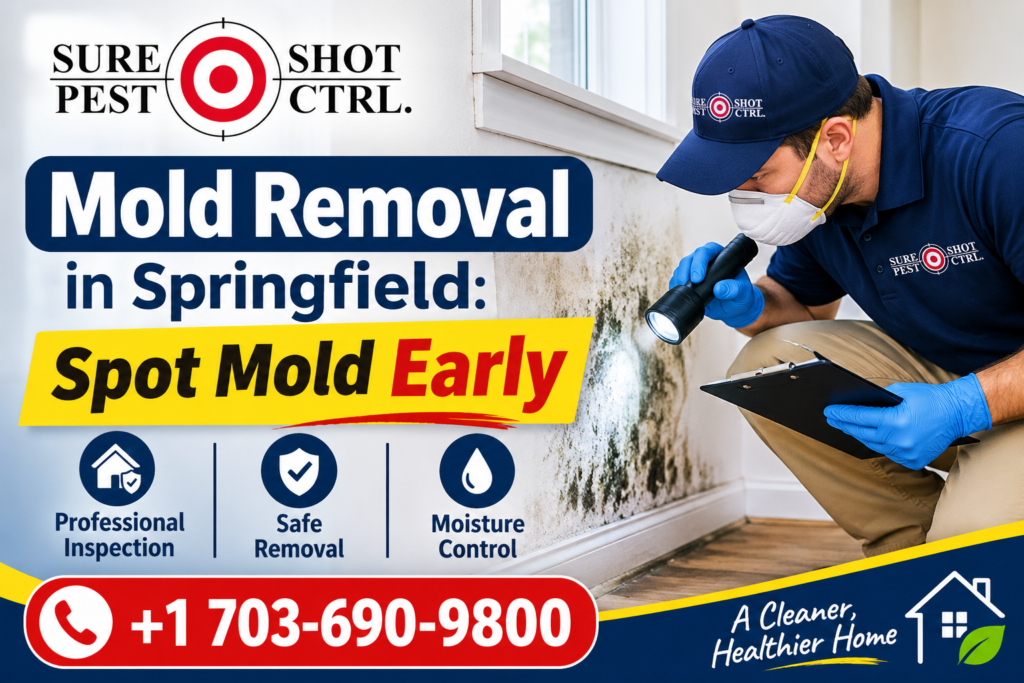
Different parts of a home can experience moisture problems for different reasons. Identifying these locations can help homeowners recognize potential mold issues early.
Bathrooms
Bathrooms are frequently exposed to moisture from showers, bathtubs, sinks, and steam. Without adequate ventilation, moisture may collect on walls, ceilings, grout, and around fixtures.
Basements and Crawl Spaces
Basements and crawl spaces can experience moisture from groundwater, foundation cracks, drainage issues, or humid air. These areas may remain damp for extended periods, making them important locations to inspect.
Kitchens
Mold may develop beneath sinks, behind refrigerators, around dishwashers, and near leaking water lines. Small plumbing leaks can remain unnoticed until visible damage appears.
Attics
Roof leaks, poor airflow, and condensation can create moisture problems in attics. Mold may develop on roof sheathing, insulation, or wooden framing.
Windows and Exterior Walls
Condensation around windows and exterior walls can lead to damp surfaces, particularly during seasonal temperature changes. Poor insulation or ventilation may contribute to recurring moisture.
What a Professional Mold Inspection Works
A professional mold inspection helps identify visible mold, moisture conditions, and areas that may require additional attention. The goal is to understand where moisture is entering or accumulating and determine the appropriate next steps.
Visual Assessment
The inspection may begin with checking visible surfaces for discoloration, mold growth, water stains, peeling paint, and signs of previous moisture damage.
Moisture Detection
Moisture meters and other inspection equipment can help identify damp materials and areas that may not appear wet on the surface. Inspectors may examine walls, floors, ceilings, and other moisture-sensitive areas.
Identifying the Moisture Source
Finding the cause of moisture is an important part of mold assessment. Possible sources include leaking pipes, roof damage, poor drainage, condensation, and ventilation problems.
Evaluating Affected Materials
Depending on the situation, the inspection may identify materials that can be cleaned, materials that require specialized treatment, and porous items that may need removal because of extensive contamination.
Not every mold problem requires laboratory testing. Testing may be recommended when the situation is unclear or when a specific question needs to be answered. In many cases, visible mold and moisture conditions are sufficient to guide the next steps.
Mold Removal Process: How Professionals Address Mold
Professional mold removal involves more than wiping away visible spots. The process focuses on removing affected mold, addressing contaminated materials when necessary, and correcting the moisture conditions that allowed it to develop.
Step 1: Inspection and Assessment
A mold removal specialist evaluates the affected area, checks for moisture, and identifies possible sources of water intrusion. This helps determine whether the mold is limited to a surface or may be affecting hidden materials.
Step 2: Moisture Source Correction
Leaks, condensation, drainage problems, or ventilation issues should be addressed before or during the cleanup process. Leaving the moisture source unresolved can lead to recurring mold growth.
Step 3: Cleaning and Removal
Depending on the affected material, mold may be cleaned from suitable hard surfaces or removed along with damaged porous materials. Drywall, insulation, carpet padding, and other absorbent materials may require replacement when mold contamination cannot be properly addressed.
Step 4: Drying and Moisture Management
Affected materials must be dried thoroughly. Dehumidifiers, appropriate ventilation, and moisture-control methods may be used depending on the location and extent of damage.
Step 5: Final Assessment
The cleaned area should be checked for remaining visible mold, dampness, and signs of the original moisture problem. A successful remediation process addresses both mold and the underlying water issue.
The Environmental Protection Agency (EPA) emphasizes that moisture control is central to mold prevention and that cleaning alone may not solve a recurring mold problem.
DIY Mold Cleanup vs. Professional Mold Removal
Not every mold problem requires a professional service. Small areas of mold on suitable hard surfaces may be manageable with careful cleaning, provided the moisture problem is corrected and appropriate precautions are taken.
However, larger or hidden mold problems may require specialized equipment, protective measures, and a more detailed remediation plan.
| Mold Situation | Recommended Action |
| Small mold spots on hard surfaces | Carefully clean with appropriate products and dry completely |
| Mold covering a larger area | Consider professional mold remediation |
| Mold behind drywall or under flooring | Arrange an assessment before disturbing materials |
| Mold after flooding or sewage backup | Seek experienced remediation professionals |
| Mold repeatedly returning | Investigate the underlying moisture source |
| Mold near HVAC components | Have the system evaluated before operating if contamination is suspected |
The EPA generally recommends consulting a professional when mold covers more than approximately 10 square feet or when substantial water damage is involved.
Why DIY Mold Removal Can Become a Problem
Cleaning mold without proper precautions may spread spores or expose people to moldy materials. Removing wallpaper, cutting drywall, pulling up carpeting, or aggressively scrubbing extensive mold growth may disturb contaminated areas.
Homeowners should also avoid painting over mold or using paint to hide moisture damage. Covering the problem does not remove mold or correct the conditions supporting it.
If you are unsure about the extent of mold growth, a professional assessment can help determine the safest next step.
How to Prevent Mold from Returning
Preventing mold requires controlling moisture throughout the home. Springfield homeowners can reduce the likelihood of recurring mold problems by paying attention to indoor humidity, ventilation, plumbing, and water damage.
Maintain Indoor Humidity
Try to keep indoor relative humidity below 60%, ideally between 30% and 50% when practical. A hygrometer can help monitor humidity levels, while a dehumidifier may be useful in damp basements or other moisture-prone areas.
Improve Bathroom and Kitchen Ventilation
Use exhaust fans while showering, cooking, or performing activities that release moisture. Make sure fans vent outdoors rather than into attics or other enclosed spaces.
Repair Leaks Quickly
Inspect faucets, pipes, water heaters, ceilings, and windows for leaks. Even a slow drip can create enough moisture to support mold growth behind cabinets or walls.
Dry Water-Damaged Materials Promptly
Wet carpets, flooring, furniture, and other materials should be dried as quickly as possible. The EPA recommends addressing wet or damp materials within 24–48 hours to help prevent mold growth.
Keep Gutters and Drainage Clear
Blocked gutters and poor drainage may direct water toward the foundation. Keeping gutters clear and directing downspouts away from the house can help reduce moisture intrusion.
Check Hidden Areas Regularly
Inspect beneath sinks, around washing machines, near basement walls, and behind furniture placed against exterior walls. Early detection can make moisture problems easier to address.
Choosing a Mold Removal Company in Springfield
Finding the right mold removal company is important when mold growth is extensive, hidden, recurring, or associated with significant water damage.
Before hiring a mold removal specialist, homeowners should consider the following:
- Experience handling residential mold and moisture problems.
- A clear explanation of the inspection and cleanup process.
- Identification of the moisture source rather than focusing only on visible mold.
- Appropriate safety precautions and equipment.
- Clear communication about which materials may require removal.
- A detailed scope of work and transparent pricing.
- Recommendations for preventing mold from returning.
A reliable company should explain what it has identified, what needs to be addressed, and why a particular cleaning or remediation method is appropriate. Avoid choosing a service based only on claims that mold can be permanently eliminated from every indoor environment.
Why Springfield Homeowners Should Address Mold Early
Mold growth can gradually damage surfaces and building materials if moisture conditions continue. What begins as a small patch around a window or bathroom ceiling may spread to surrounding materials when the area remains damp.
Early action can help homeowners identify leaks, prevent additional material damage, and reduce the need for more extensive cleanup. It can also help identify hidden moisture issues before they become more difficult to manage.
Whether you notice mold in a basement, bathroom, kitchen, attic, or around windows, addressing the moisture problem promptly is one of the most important steps toward maintaining your home.
FAQs About Mold Removal in Springfield
1. How do I know if my home has a mold problem?
Common signs include musty odors, visible black or green spots, peeling paint, water stains, and recurring dampness. Mold may also grow behind drywall, beneath flooring, or around leaking pipes. If you notice persistent moisture or unexplained odors, consider arranging an inspection to identify the possible source.
2. When should I hire a mold removal specialist?
You should consider hiring a mold removal specialist when mold covers a large area, keeps returning, appears in hidden locations, or follows flooding or substantial water damage. Professional assistance is also advisable if the affected materials cannot be safely cleaned or if you have concerns about disturbing mold during removal.
3. How long does mold removal take in Springfield?
The time required depends on the affected area, the amount of moisture present, the materials involved, and whether repairs are necessary. A small surface cleanup may take considerably less time than remediation involving drywall, insulation, flooring, or hidden moisture. Drying and repairs can extend the overall timeline.
4. How can I prevent mold from coming back after removal?
Prevent recurring mold by fixing leaks, controlling humidity, improving ventilation, and drying wet materials promptly. Regularly inspect bathrooms, basements, windows, plumbing areas, and other moisture-prone locations. Mold removal in Springfield is more effective when the moisture source is corrected instead of simply cleaning the visible growth.
Conclusion: Take the Right Steps Toward a Mold-Free Home
Mold Removal in Springfield problems often begin with moisture that goes unnoticed. Leaking pipes, poor ventilation, damp basements, roof damage, and condensation can create conditions that allow mold to grow and spread.
Understanding the warning signs, arranging a mold inspection when necessary, and addressing moisture problems promptly can help homeowners avoid recurring mold issues. Proper cleaning, removal of affected materials when necessary, and ongoing moisture management are all important parts of maintaining a cleaner indoor environment.
If you are concerned about mold in your home, Sure Shot Pest can help you understand your options and take the next step toward addressing your mold concerns in Springfield, Virginia.
Call Sure Shot Pest: +1 703-690-9800