
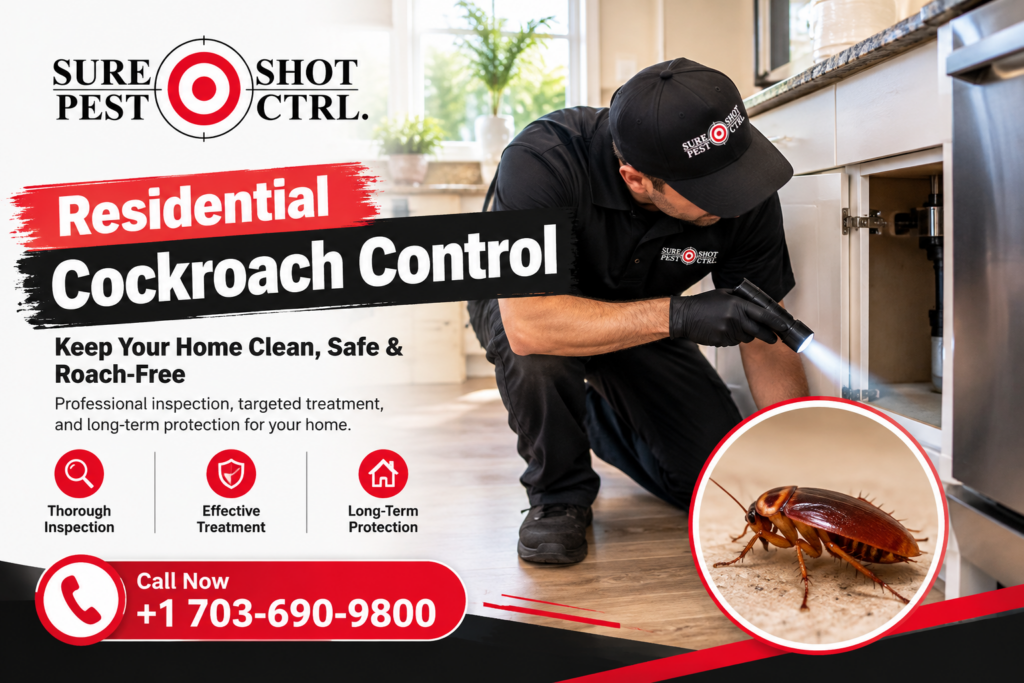
Residential Cockroach Control is an important part of keeping a home clean, comfortable, and free from unwanted pests. Cockroaches can hide in kitchens, bathrooms, utility areas, wall voids, and other dark, damp spaces, making an infestation difficult to handle with occasional DIY treatments.
A practical approach starts with identifying where cockroaches are entering or nesting, removing food and water sources, correcting conditions that support them, and applying appropriate control methods. The U.S. Environmental Protection Agency (EPA) and Centers for Disease Control and Prevention (CDC) both describe integrated pest management (IPM) as an approach that combines inspection, prevention, monitoring, and targeted control.
For homeowners in Springfield, working with a qualified pest control company can help identify the source of recurring cockroach activity and develop a treatment plan suited to the property.
What Is Residential Cockroach Control?
Residential Cockroach Control is the process of identifying, reducing, and preventing cockroach activity inside and around a home. It can include a detailed inspection, sanitation recommendations, exclusion work, monitoring, targeted treatments, and follow-up visits when necessary.
The goal is not simply to kill the cockroaches that are visible. A complete approach looks for the conditions that allow them to survive and reproduce.
According to the CDC, IPM focuses on preventing pests, keeping them out, and controlling them when they are present. Inspection and identification are important parts of this process because different pests and environments may require different control strategies.
Why Do Cockroaches Enter Homes?
Cockroaches are attracted to environments that provide easy access to food, moisture, shelter, and hiding places. Even a well-maintained home can experience cockroach activity if pests find an entry point or favorable conditions.
Common attractants include:
- Food crumbs, grease, and spills
- Unsealed food containers
- Pet food left out for extended periods
- Leaking faucets or pipes
- Moist areas under sinks
- Overflowing or uncovered garbage
- Cardboard and paper clutter
- Cracks around walls, cabinets, windows, and plumbing
- Gaps beneath doors or around utility lines
The EPA recommends reducing food and water sources, sealing cracks and openings, correcting leaks, and reducing clutter as part of effective pest prevention.
Signs You May Need Cockroach Control
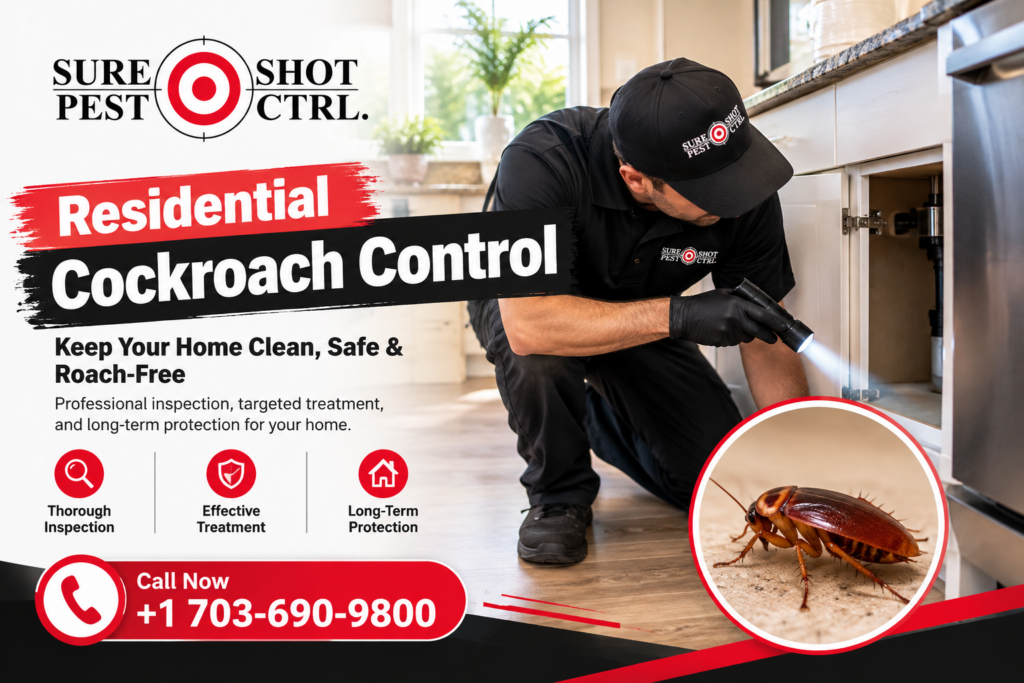
Seeing a cockroach during the day or repeatedly finding evidence of roaches should not be ignored. Cockroaches are often active at night, so visible daytime activity can indicate that pests are using hidden areas of the home.
Look for signs such as:
Live or dead cockroaches: Finding roaches in kitchens, bathrooms, basements, or other areas is an obvious warning sign.
Droppings: Small dark spots or smears may appear inside cabinets, along walls, or near food storage areas.
Egg cases: Cockroach egg cases, also called oothecae, can be found in protected areas where roaches reproduce.
Unusual odor: Larger or established infestations can contribute to an unpleasant musty or oily odor.
Shed skins and body parts: These can indicate ongoing cockroach activity even when live insects are not frequently seen.
If these signs continue after basic cleaning and sanitation, a professional Residential Cockroach Control Specialist can inspect the property and identify potential nesting or entry areas.
How a Residential Cockroach Inspection Works
A thorough Residential Cockroach Control Inspection should go beyond looking for visible insects. The inspection should consider where cockroaches may be entering, feeding, hiding, and reproducing.
A pest professional may examine:
- Kitchens and food preparation areas
- Bathrooms and plumbing spaces
- Areas beneath sinks and appliances
- Cabinets, drawers, and storage areas
- Basements, garages, and utility rooms
- Cracks, gaps, and wall penetrations
- Moisture sources and plumbing leaks
- Exterior entry points around doors and windows
Monitoring devices may also be used to determine where cockroach activity is concentrated.
The CDC identifies inspection, monitoring, pest identification, control measures, and follow-up evaluation as important components of IPM.
Why DIY Cockroach Treatments May Not Solve the Problem
Store-bought sprays may kill individual cockroaches, but treating only the insects you can see does not necessarily address hidden activity.
Cockroaches can shelter behind appliances, inside cracks, around plumbing penetrations, and in other protected locations. Repeatedly spraying visible insects without addressing food, moisture, shelter, and entry points can leave the underlying conditions unchanged.
The EPA recommends an integrated approach that combines preventive measures with appropriate control methods rather than relying exclusively on pesticides.
Another concern is improper pesticide use. Homeowners should always read product labels and follow directions. Products intended for outdoor use should not be used indoors, and pesticides should be kept away from children and pets according to label requirements.
How to Prevent Cockroaches at Home
Prevention is an important part of long-term Residential Cockroach Control. Homeowners can make their property less attractive to cockroaches by removing the resources they need.
Keep food in sealed containers, clean crumbs and spills promptly, empty garbage regularly, and avoid leaving pet food exposed overnight. Fix leaking plumbing and dry damp areas around sinks, appliances, and other moisture sources.
It is also useful to seal cracks and gaps around baseboards, pipes, cabinets, windows, and doors. Reducing cardboard, paper, and unnecessary clutter can remove potential hiding areas.
These practices support the IPM principle of eliminating food, water, shelter, and access routes that allow pests to survive.
When Should You Call a Cockroach Control Specialist?
Consider contacting a Residential Cockroach Control Specialist when:
- Cockroaches appear repeatedly
- You find cockroach droppings or egg cases
- Roaches continue appearing after cleaning
- Activity is occurring in several rooms
- You notice cockroaches during daylight
- The infestation seems to return after treatment
- You are unsure where the insects are entering
- You want a professional inspection before choosing a treatment
Early attention can make it easier to identify contributing conditions before cockroach activity becomes more widespread.
Residential Cockroach Control in Springfield
Homeowners searching for a Springfield Residential Cockroach Control Company should look for a provider that takes the time to inspect the property rather than immediately applying a generic treatment.
A professional service should consider the home’s construction, moisture conditions, sanitation factors, possible entry points, and locations where cockroaches may be hiding. Treatment recommendations should also take household considerations into account, including children, pets, food preparation areas, and other sensitive spaces.
For Springfield homeowners, Sure Shot Pest provides pest control services designed around identifying and addressing residential pest problems. A proper inspection can help determine the type and extent of cockroach activity and identify conditions that may contribute to recurrence.
What Makes an Effective Cockroach Control Plan?
An effective plan generally combines several steps instead of depending on one treatment.
Inspection and Identification
First, determine where cockroaches are active and what conditions are supporting them.
Sanitation and Moisture Reduction
Remove accessible food and water sources. Address leaks and moisture problems where possible.
Exclusion
Seal cracks, gaps, and openings that may allow cockroaches to enter or move through the property.
Targeted Treatment
When treatment is necessary, pest professionals can select appropriate methods based on the pest, infestation conditions, and treatment location.
Monitoring and Follow-Up
Follow-up inspection and monitoring can help determine whether activity is declining and whether additional corrective measures are needed.
This multi-step strategy aligns with modern IPM principles described by the CDC and EPA.
FAQs
What is Residential Cockroach Control?
Residential Cockroach Control involves inspecting a home for cockroach activity, identifying contributing conditions, reducing food and moisture sources, addressing entry points, and using appropriate pest management methods. A professional approach may also include monitoring and follow-up to evaluate ongoing activity.
How do I know if I need Residential Cockroach Control?
Repeated sightings, cockroach droppings, egg cases, shed skins, or unusual odors can indicate an infestation. If cockroaches continue appearing despite cleaning and basic prevention, a professional inspection can help determine whether hidden activity or entry points are present.
How does a Residential Cockroach Control Specialist treat an infestation?
A Residential Cockroach Control Specialist typically begins with an inspection and identification of activity areas. Depending on the property, the control plan may involve sanitation recommendations, exclusion, monitoring, and targeted treatments. Follow-up may be recommended when ongoing activity requires additional evaluation.
How can I prevent cockroaches from returning?
Keep food sealed, clean crumbs and spills promptly, remove garbage regularly, correct leaks, reduce clutter, and seal cracks or gaps around the home. Consistent sanitation and moisture control can make the property less favorable to cockroaches and support a long-term pest management plan.
Conclusion: Keep Your Home Roach-Free
Residential Cockroach Control works best when it addresses more than the cockroaches that are immediately visible. Inspection, sanitation, moisture management, exclusion, monitoring, and targeted treatment can work together to reduce activity and address conditions that allow infestations to continue.
If you are seeing recurring cockroach activity in your Springfield home, a professional cockroach inspection can help identify where the problem is coming from and what steps may be appropriate next.
Contact Sure Shot Pest to schedule a residential pest inspection and discuss your cockroach control needs.