
Rodent Control Inspection is an important step in identifying mice, rats, and potential entry points before an infestation becomes a bigger household problem. Rodents can hide inside walls, attics, basements, kitchens, and other areas where they have access to food, water, and shelter. Although homeowners may notice scratching sounds or droppings, the actual source of rodent activity is not always easy to locate.
For homeowners in Springfield, Virginia, regular property inspections can help identify early warning signs and reduce conditions that attract rodents. A professional inspection also helps determine where rodents are entering, which areas are affected, and what control measures may be appropriate.
At Sure Shot Pest, understanding the signs of rodent activity and the importance of proper inspection can help property owners make informed decisions about residential pest management.
Why Is a Rodent Control Inspection Important?
A rodent inspection helps identify the presence of mice and rats, locate their nesting areas, and discover how they enter a building. It also helps property owners understand the conditions that may encourage rodents to remain on the premises.
Rodents reproduce quickly when suitable food and shelter are available. Ignoring early warning signs can allow a small problem to develop into a larger infestation.
A detailed inspection is useful because it can:
- Identify rodent droppings, nesting materials, and gnaw marks.
- Locate cracks, holes, and gaps around the property.
- Detect possible damage to insulation, wiring, and stored materials.
- Identify food and water sources attracting rodents.
- Help determine suitable rodent control methods.
- Support long-term prevention and property maintenance.
Rather than focusing only on visible rodents, a proper control inspection examines the entire environment to understand why the activity is occurring.
Common Signs That Your Property Needs a Rodent Inspection
Mice and rats are generally active in hidden areas, particularly during nighttime hours. However, they often leave physical evidence that homeowners can recognize.
1. Rodent Droppings
Small, dark droppings are among the most common indicators of rodent activity. They may appear inside kitchen cabinets, behind appliances, near food storage areas, in basements, or around garages.
Fresh droppings may indicate ongoing activity, especially when they continue appearing after an area has been cleaned safely.
2. Scratching and Movement Sounds
Unusual scratching, squeaking, or movement sounds coming from ceilings, walls, and attic spaces may indicate rodents moving through hidden areas.
These sounds are particularly noticeable at night when household activity decreases.
3. Gnaw Marks and Property Damage
Rodents constantly chew on different materials. Their teeth can leave marks on wooden surfaces, plastic containers, cardboard packaging, and other household materials.
Damaged electrical wiring is another concern because exposed wires can create potential fire hazards.
4. Nesting Materials
Mice and rats may collect shredded paper, fabric, cardboard, insulation, and dried plant materials to create nests.
These materials are often discovered in storage rooms, attics, garages, and other areas that receive limited attention.
5. Unusual Odors
A persistent musty or unpleasant smell in enclosed areas may indicate rodent activity. Accumulated urine, droppings, and hidden nesting materials can contribute to these odors.
When several of these signs appear together, arranging a professional rodent control inspection can help determine the extent of the problem.
What Does a Professional Rodent Control Inspection Include?
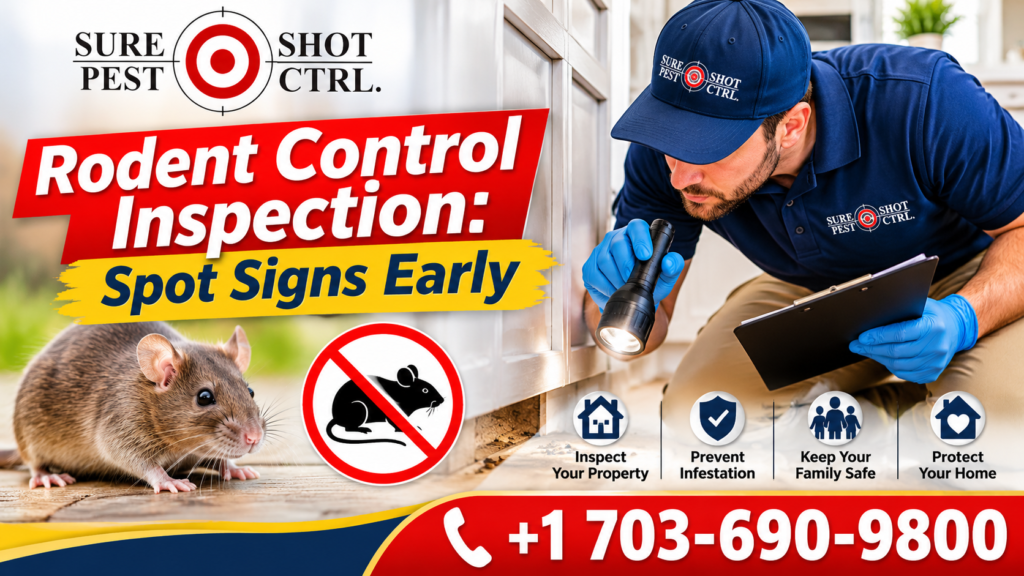
A professional inspection involves more than checking for visible mice or rats. It examines the building, surrounding environment, and conditions that may support rodent activity.
Interior Property Inspection
The inspection usually begins with areas where rodents commonly hide or search for food.
A trained pest control professional may examine:
- Kitchen cabinets and pantry storage areas.
- Spaces behind refrigerators, ovens, and washing machines.
- Basements, crawl spaces, and utility rooms.
- Attics and insulation.
- Garages, closets, and storage rooms.
- Areas around plumbing and electrical openings.
The purpose is to identify evidence of rodent activity, possible nesting locations, and pathways connecting different parts of the property.
Exterior Property Inspection
The outside of a building is equally important because rodents frequently enter through small structural openings.
An exterior control inspection may include:
- Foundation cracks and openings.
- Gaps around doors and windows.
- Rooflines, eaves, and soffits.
- Garage doors and exterior storage areas.
- Openings around plumbing and utility lines.
- Vegetation, woodpiles, and accumulated debris near the building.
According to the CDC, mice can enter through openings approximately one-quarter inch wide. This makes even relatively small gaps important during a property inspection.
Identifying Rodent Entry Points
Finding how rodents enter a property is one of the most important parts of an inspection.
Mice may squeeze through very small openings, while rats can use damaged vents, gaps beneath doors, and larger structural openings.
An inspection helps identify these vulnerable areas so that appropriate exclusion and repair measures can be recommended.
How Does Rodent Control Work After an Inspection?
Once the inspection is complete, the next step is to develop a control plan based on the property’s condition and the level of rodent activity.
Step 1: Identify the Rodent Problem
The first step is determining whether the evidence points to mice, rats, or another type of pest. Different rodents may require different control approaches.
Step 2: Locate Nesting and Activity Areas
Identifying where rodents travel, feed, and nest help determine where control measures should be placed.
Step 3: Recommend Appropriate Control Methods
Depending on the inspection findings, a pest control company may recommend suitable traps, properly managed bait stations, sanitation improvements, or other control methods.
Any rodenticide should be used according to its product label and applicable safety requirements, particularly around children and pets.
Step 4: Seal Potential Entry Points
Exclusion is an important part of long-term rodent management. Small openings may be sealed with suitable materials, while larger gaps may require metal mesh, hardware cloth, cement, or professional repairs.
Step 5: Monitor for Further Activity
Follow-up inspections can help determine whether rodent activity has stopped and whether additional treatment or structural improvements are needed.
Combining inspection, control, exclusion, and monitoring provide a more complete approach than relying on traps alone.
Why Springfield, VA Homeowners Should Pay Attention to Rodent Activity
Springfield, Virginia, has a mixture of residential neighborhoods, commercial buildings, landscaped properties, and outdoor storage areas. These environments can provide rodents with access to food, shelter, and potential nesting locations.
Seasonal weather changes may also influence rodent movement. As outdoor temperatures decrease, mice and rats may seek warmer places inside homes and buildings.
Homeowners should pay particular attention to attics, garages, basements, crawl spaces, and kitchen storage areas.
A regular rodent inspection is especially useful when:
- You hear scratching sounds inside walls or ceilings.
- Droppings appear in cabinets or storage rooms.
- You discover damaged food packaging.
- Rodents have been noticed around outdoor garbage containers.
- You find holes near the foundation or utility openings.
- Previous rodent activity has returned after treatment.
Working with a local pest control company can help property owners identify these issues and understand which corrective measures are appropriate.
Practical Tips to Prevent Future Rodent Problems
Preventing rodents begins with removing the conditions that attract them. Even after professional treatment, poor sanitation and unsealed entry points can create opportunities for another infestation.
Here are some practical prevention measures:
Store Food Properly: Keep dry food, pet food, and other edible materials in tightly sealed containers. Clean food spills promptly and avoid leaving pet food out overnight.
Manage Household Waste: Use garbage containers with secure lids and empty them regularly. Keep outdoor trash areas clean.
Reduce Clutter: Cardboard boxes, unused furniture, and stored materials can provide places for rodents to hide and nest.
Maintain Your Yard: Remove unnecessary debris, manage overgrown vegetation, and keep firewood stored away from the building.
Inspect Structural Openings: Check around doors, windows, pipes, vents, and foundations for gaps that may allow rodents inside.
Address Water Sources: Repair leaking pipes and faucets, and avoid leaving standing water around the property.
These measures reduce the resources rodents need to survive and make your property less attractive to them.
Why Choose a Professional Rodent Inspection Company?
Rodent problems are not always limited to areas where droppings or gnaw marks are visible. Activity may extend into wall cavities, insulation, crawl spaces, and other difficult-to-reach locations.
A professional rodent inspection provides a more organized way to investigate these areas and identify the conditions contributing to the problem.
An experienced pest control professional can help property owners understand the inspection findings, identify possible entry points, and select appropriate control measures.
When choosing a rodent control company, consider its experience, inspection process, treatment recommendations, safety practices, and ability to explain prevention measures clearly.
At Sure Shot Pest, property owners can explore professional pest management services and learn more about addressing common rodent concerns in Springfield, VA.
FAQs About Rodent Control Inspection
1. What Is Included in a Rodent Control Inspection?
A Rodent Control Inspection typically includes checking for droppings, gnaw marks, nesting materials, unusual odors, and possible entry points. Professionals may examine attics, basements, kitchens, crawl spaces, garages, and exterior foundations to identify rodent activity and recommend appropriate control measures.
2. How Often Should a Home Have a Rodent Inspection?
The inspection frequency depends on the property’s condition, location, and history of rodent activity. Homes with previous infestations or noticeable entry points may benefit from more frequent assessments. Regularly checking attics, garages, foundations, and storage areas can also help identify early warning signs.
3. Can Rodents Enter a Home Through Small Openings?
Yes. Mice can squeeze through openings approximately one-quarter inch wide. Gaps around pipes, doors, windows, foundations, and utility lines may provide access. Sealing these openings with appropriate materials is an important part of rodent exclusion and long-term pest management.
4. When Should I Contact a Rodent Control Specialist in Springfield?
Contact a Rodent Control Inspection specialist when you notice droppings, scratching sounds, gnaw marks, damaged food packaging, or nesting materials. Professional assessment can help identify the source of activity and determine suitable control and prevention measures for your Springfield property.
Conclusion: Take the First Step Toward a Rodent-Free Property
Rodent Control Inspection problems can develop quietly, making early inspection an important part of responsible property maintenance. From identifying droppings and nesting materials to locating entry points and recommending suitable control methods, a detailed inspection helps property owners understand what is happening inside and around their buildings.
For homeowners and businesses in Springfield, Virginia, addressing rodent activity early can help reduce property damage and limit conditions that attract mice and rats.
Sure Shot Pest encourages property owners to take rodent warning signs seriously and consider professional pest management when needed.
Contact Sure Shot Pest at +1 703-690-9800 to learn more about rodent control services and inspection options in Springfield, VA.