
Bed Bug Treatment in Springfield is often needed when homeowners notice unexplained bites, small blood spots on bedding, or live insects around mattresses and furniture. Bed bugs are small, persistent pests that can hide in mattress seams, bed frames, cracks, upholstered furniture, and other areas close to where people sleep.
Finding one does not always mean an extensive infestation, but it should not be ignored. Early identification and a careful inspection can help determine whether bed bugs are present and where they may be hiding.
The U.S. Environmental Protection Agency recommends an Integrated Pest Management approach for bed bug control. This combines inspection, monitoring, physical methods, preparation, and appropriate pest-control products rather than relying on one method alone.
For homeowners looking for Bed Bug Treatment in Springfield, understanding the process can make it easier to recognize a problem and choose an appropriate treatment plan.
What Are Bed Bugs?
Bed bugs are small, reddish-brown insects that feed on blood. They are particularly associated with sleeping areas because they tend to remain close to hosts while hiding in protected spaces during the day.
They can enter homes through luggage, used furniture, clothing, bags, bedding, and other belongings. They may also move between rooms or neighboring units in multi-family properties.
Bed bugs are not necessarily a sign of poor housekeeping. They can affect clean homes, apartments, hotels, offices, and other occupied spaces.
Because bed bugs are good at hiding, seeing them can be difficult. An inspection should therefore look beyond the mattress and examine nearby areas where insects, eggs, shed skins, or fecal spotting may be present.
Signs You May Need Bed Bug Treatment
Not every skin irritation or insect found indoors is caused by bed bugs. A proper inspection can help separate a suspected bed bug issue from other possible causes.
Common signs include:
- Small reddish or dark spots on sheets and mattresses
- Live bed bugs around mattress seams or furniture
- Tiny pale eggs or shed skins
- Dark spotting around hiding places
- Musty odors associated with larger infestations
- Repeated bites or itchy skin after sleeping
Bed bugs can hide in mattress piping, box springs, bed frames, headboards, baseboards, cracks, and upholstered furniture. They may also be found inside luggage or personal belongings.
For this reason, searching only the mattress may not reveal the full extent of an infestation.
Why a Bed Bug Inspection Matters
A thorough Bed Bug Treatment in Springfield plan should begin with identifying the problem as accurately as possible.
During an inspection, a pest control professional may examine:
- Mattress and box spring seams
- Bed frames and headboards
- Nightstands and nearby furniture
- Baseboards and wall gaps
- Upholstered furniture
- Closets and cluttered areas
- Cracks and crevices
- Luggage and other potential hiding areas
The purpose is not simply to find one insect. The inspection helps determine where bed bugs may be hiding and whether activity appears limited to one area or extends farther through the property.
The EPA notes that professional bed bug management may involve inspecting residences, examining furniture, and using methods such as vacuuming, heat, and appropriately selected pesticides as part of an integrated strategy.
How Bed Bug Treatment in Springfield Works
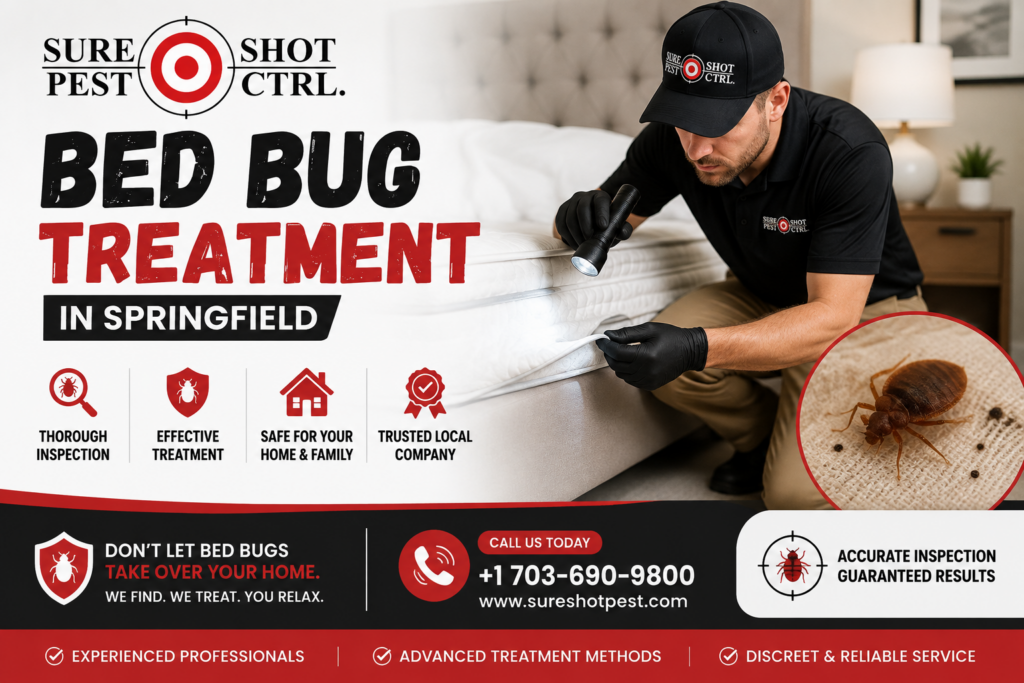
There is no single treatment method that fits every infestation. The appropriate approach depends on the size and location of the infestation, the property, preparation, and other conditions.
1. Inspection and Identification
The first step is locating evidence of bed bugs and identifying areas that require attention. This helps prevent treating only the most visible location while overlooking nearby hiding spots.
2. Preparation
Preparation can involve laundering bedding and clothing, reducing clutter, moving certain items, vacuuming, and following specific instructions provided by the pest control company.
EPA guidance emphasizes that preparation plays an important role in bed bug control because reducing hiding places and properly handling affected belongings can support the overall treatment process.
3. Physical and Non-Chemical Methods
Physical methods may include vacuuming, mattress and box-spring encasements, bed bug interceptors, steaming, or professionally managed heat treatments.
For example, EPA guidance states that clothing and bedding placed in a dryer at high temperatures for 30 minutes can kill bed bugs. Specialized heat treatment can also be used for certain items or areas when properly performed.
4. Targeted Pest Control Applications
Depending on the situation, an appropriate EPA-registered product may be incorporated into the treatment plan. The product and application method should be selected and used according to its label.
Using more pesticide does not necessarily mean better control. EPA specifically warns against unsafe or improper pesticide use and recommends following product labels carefully.
5. Monitoring and Follow-Up
Bed bug control may require continued monitoring and additional visits. Eggs can survive certain treatment approaches, and missed insects can lead to continued activity.
EPA advises homeowners to expect that multiple visits may be necessary because very few infestations are controlled with only one treatment.
Why DIY Bed Bug Treatment May Not Be Enough
Searching online for a quick bed bug solution is understandable, but treating an infestation can be more complicated than simply spraying visible insects.
Bed bugs can hide in very small cracks and may be resistant to certain pesticide ingredients. EPA explains that treatment effectiveness can depend on infestation size, preparation, application quality, coverage of different life stages, and pesticide resistance.
Some common DIY approaches can also create unnecessary risks. For example, EPA warns against using rubbing alcohol, unsafe heating methods, outdoor pesticides indoors, or excessive pesticide applications. Foggers and bug bombs should not be relied on as the only method of bed bug control.
If signs continue after DIY attempts, arranging a professional inspection can help determine what is actually happening.
Choosing a Bed Bug Treatment Company in Springfield
When comparing a company for bed bug services, homeowners should look beyond price alone. Ask how the company approaches inspection, treatment, monitoring, preparation, and follow-up.
Useful questions include:
- Does the company perform a detailed inspection before treatment?
- Does it use an Integrated Pest Management approach?
- What preparation is required before service?
- Are follow-up inspections or treatments available?
- Are the products used registered and labeled for bed bug control?
- Does the company explain what homeowners should do between visits?
EPA recommends choosing a pest management professional who uses IPM and checking credentials before hiring.
For Springfield homeowners, a company that clearly explains the treatment process can make the experience easier to understand and manage.
How to Prepare Your Home for Bed Bug Treatment
Following preparation instructions carefully can support the treatment process.
Depending on the treatment plan, preparation may involve:
- Washing and drying bedding and clothing as instructed
- Removing unnecessary clutter from treatment areas
- Vacuuming appropriate areas
- Keeping treated belongings separated
- Moving furniture only when instructed
- Following all instructions provided by the pest control professional
Do not move infested furniture or belongings to another room without guidance. Moving items unnecessarily can spread bed bugs to previously unaffected areas.
In apartments and other multi-family properties, communication is also important because bed bugs can move between nearby units. EPA recommends involving building management when bed bugs are found in multi-family housing.
Preventing Bed Bugs After Treatment
Once treatment has been completed, prevention and monitoring remain important.
When traveling, inspect luggage and belongings before bringing them into sleeping areas. After returning home, laundering and drying suitable clothing can reduce the chance of bringing hidden insects indoors.
At home, keep sleeping areas reasonably organized so potential hiding places are easier to inspect. Mattress and box-spring encasement and bed bug interceptors can also help with monitoring.
If you notice new evidence after treatment, contact the pest control company rather than repeatedly applying products on your own.
When Should You Schedule an Inspection?
You should consider scheduling a Bed Bug Treatment in Springfield inspection when you find a suspected bed bug, notice repeated signs around sleeping areas, discover unexplained spotting on bedding, or find evidence that continues despite cleaning.
Early inspection can help establish whether bed bugs are actually present and identify areas that may need attention.
Waiting can allow an infestation to become more difficult to manage, particularly when insects have access to multiple hiding locations.
Trustworthy Bed Bug Information Matters
Bed bug control can involve multiple methods, and recommendations should be based on established pest-management practices rather than quick fixes.
The EPA’s current guidance emphasizes Integrated Pest Management, careful preparation, monitoring, appropriate physical methods, and safe pesticide use. Its guidance also makes clear that patience is important because bed bug control may require repeated effort and follow-up.
Sure Shot Pest can help Springfield homeowners understand the inspection and treatment process and determine the appropriate next step for a suspected infestation.
FAQ
What is the first step in Bed Bug Treatment in Springfield?
The first step is usually a detailed inspection to confirm whether bed bugs are present and identify likely hiding areas. An inspection can examine mattresses, furniture, bed frames, baseboards, cracks, and other nearby locations. The findings help determine which treatment methods may be appropriate for the property.
How long does Bed Bug Treatment in Springfield take?
Treatment time varies according to the size and location of the infestation and the methods being used. Some treatments can be completed during a scheduled service, while more complicated infestations may require follow-up visits. Monitoring is important because bed bug eggs and hidden insects can make control an ongoing process.
Can I get rid of bed bugs without professional treatment?
Small problems may sometimes be managed with careful, comprehensive methods, but bed bugs are difficult to eliminate because they hide well and some populations have pesticide resistance. EPA recommends an Integrated Pest Management approach that combines appropriate physical, chemical, and monitoring methods.
What should I look for when choosing a bed bug company?
Look for a company that provides a detailed inspection, explains preparation requirements, follows an Integrated Pest Management approach, uses appropriate registered products when needed, and provides monitoring or follow-up guidance. EPA recommends checking the credentials of pest management professionals before hiring them.
Conclusion: Take Bed Bug Signs Seriously
Bed bugs can be difficult to locate and control, but a structured approach can make the problem easier to understand and manage. A proper Bed Bug Treatment in Springfield process should focus on inspection, preparation, appropriate treatment methods, monitoring, and follow-up rather than relying on a single quick fix.
If you suspect bed bug activity in your Springfield home or property, contact Sure Shot Pest to schedule an inspection and discuss the appropriate treatment options for your situation.