
Cockroach Pest Control is an important part of maintaining a clean and comfortable home, especially when you notice roaches in kitchens, bathrooms, basements, or other damp areas. A cockroach problem rarely disappears simply because visible insects are removed. Food, moisture, hiding places, and entry points can continue supporting an infestation.
For homeowners searching for Pest Control, Cockroach Pest, or Cockroach Pest Control in Springfield, understanding the causes, warning signs, inspection process, and prevention methods can help you make informed decisions.
What Is Cockroach Pest Control?
Cockroach Pest Control involves identifying where cockroaches are living, finding the conditions that support them, and applying appropriate control measures. Modern pest management commonly uses an integrated approach rather than relying only on repeated pesticide spraying.
The U.S. Environmental Protection Agency describes Integrated Pest Management, or IPM, as a combination of monitoring, prevention, and appropriate control methods designed to manage pests while considering risks to people, property, and the environment.
In practical terms, effective cockroach management may involve:
- Identifying the cockroach species and areas of activity
- Inspecting kitchens, bathrooms, plumbing areas, cabinets, and other hiding locations
- Removing food and water sources
- Sealing cracks and potential entry points
- Using appropriate baits or other targeted treatments when necessary
- Monitoring activity after treatment
This approach addresses the conditions that allow cockroaches to survive instead of focusing only on the insects that are visible.
Why Do Cockroaches Enter Homes?
Cockroaches need three basic things: food, water, and shelter. A home can provide all three without the occupants realizing it.
Food sources can include crumbs, grease, food residue, pet food, garbage, and improperly stored groceries. Water may come from leaking pipes, faucets, condensation, wet sinks, or other moisture problems.
Shelter is often available inside wall voids, cabinets, cracks, appliances, cardboard boxes, cluttered storage areas, and spaces around plumbing.
The EPA recommends reducing access to food and water, repairing leaks, storing food securely, removing garbage regularly, and sealing cracks or openings that pests can use.
Signs You May Have a Cockroach Problem
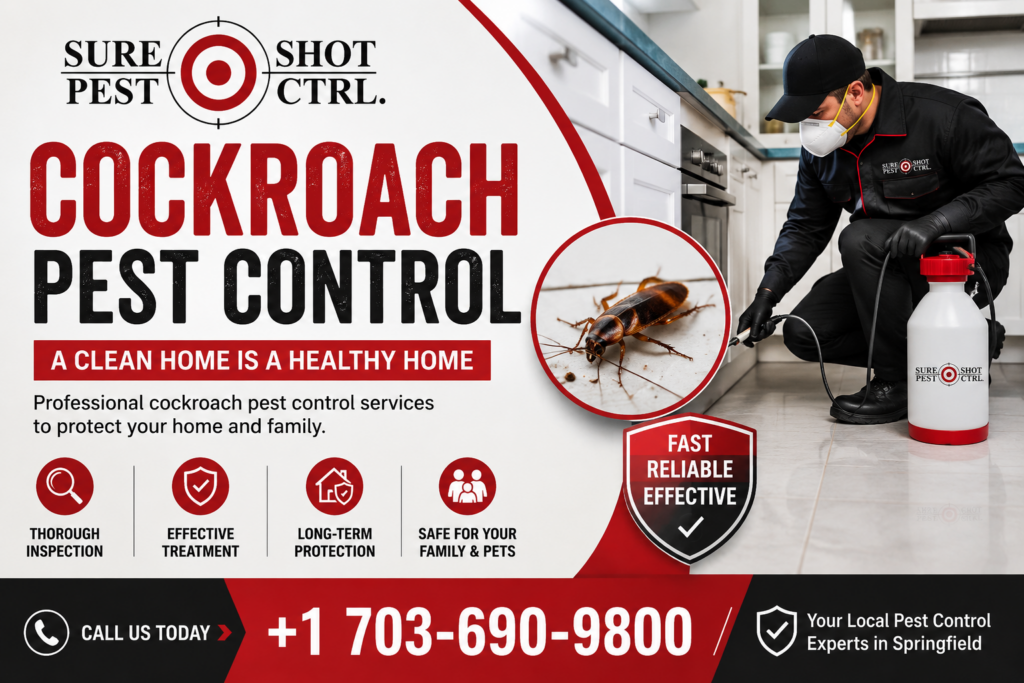
Cockroaches are primarily active at night, so seeing one during the day can sometimes indicate that activity is occurring in areas you cannot easily see. However, a single sighting does not automatically establish the size of an infestation.
Look for several signs together:
Live or Dead Cockroaches
Seeing roaches around kitchen cabinets, sinks, bathrooms, utility areas, or appliances can indicate activity. Repeated sightings deserve closer attention.
Droppings
Small dark droppings may appear in drawers, cabinet corners, behind appliances, or along walls. These areas should be included during an inspection.
Egg Cases
Cockroach egg cases, called ootheca, can be found in protected locations. Finding them may indicate that cockroaches are reproducing nearby.
Unusual Odor
Larger or established infestations can sometimes produce a noticeable musty odor, particularly in enclosed areas.
Shed Skin or Body Parts
Cockroaches shed their outer skin as they develop. Finding shed skins or body fragments can provide another clue that activity is occurring.
Why a Cockroach Inspection Matters
A proper Inspection is one of the most useful steps in cockroach management because visible activity does not always reveal where the insects are hiding.
During an inspection, areas such as kitchens, bathrooms, cabinets, plumbing penetrations, appliances, wall gaps, storage spaces, and other potential harbor-ages can be evaluated.
The goal is to determine:
- Where cockroaches are active
- What may be attracting them
- Where they may be entering or moving through the property
- Whether moisture or sanitation issues are contributing to activity
- Which treatment and prevention measures are appropriate
Accurate identification also matters because different cockroach species can behave differently and may use different parts of a building.
How Cockroach Pest Control Works
Cockroach Pest Control is most effective when treatment is combined with environmental improvements and monitoring.
1. Inspection and Identification
The first step is determining where cockroach activity is concentrated. Technicians may look for live insects, droppings, egg cases, harbor-ages, moisture sources, and entry points.
2. Sanitation and Moisture Reduction
Keeping surfaces free from food residue, storing food in sealed containers, removing garbage regularly, and correcting plumbing leaks can make the environment less attractive to cockroaches.
The CDC also recommends cleaning crumbs and spills promptly, storing food in airtight containers, keeping trash covered, vacuuming or sweeping areas that may attract pests, and sealing cracks around cabinets, walls, baseboards, and plumbing.
3. Targeted Treatment
Depending on the inspection findings, appropriate pest control products may be used in targeted locations. Baits and other carefully selected treatment methods can be part of an IPM program.
Pesticides should always be used according to their label directions and applicable regulations. The EPA advises considering non-chemical prevention measures first and using pesticides only when needed.
4. Monitoring
After treatment, monitoring helps determine whether cockroach activity is declining and whether additional corrective measures are needed.
This is particularly important in multi-unit buildings, where cockroaches can move between connected areas through cracks, plumbing routes, walls, and other pathways.
Cockroach Pest Control in Springfield
For homeowners searching for Cockroach Pest Control Springfield, local conditions and the characteristics of the property can influence where cockroaches are found.
Older homes may have more cracks, gaps, aging plumbing connections, or hidden voids. Apartments and multi-family properties can present additional challenges because pest activity may not be limited to one living space.
A practical approach is to combine an inspection with housekeeping, moisture control, exclusion, targeted treatment, and follow-up monitoring.
Sure Shot Pest can help homeowners understand the source of cockroach activity and identify appropriate pest management steps based on the property and observed conditions.
How to Prevent Cockroaches After Treatment
Prevention plays an important role in long-term pest management. Even after treatment, conditions that provide food, water, and shelter can allow cockroaches to return.
Keep kitchen counters and floors free from food debris. Clean spills promptly and avoid leaving dirty dishes sitting overnight. Store dry foods and pet food in sealed containers.
Check beneath sinks and around appliances for leaks or moisture. Repair damaged plumbing and avoid allowing standing water to remain indoors.
Reduce clutter, especially cardboard, paper bags, and other materials that can provide hiding places. Seal cracks around baseboards, cabinets, windows, doors, and plumbing openings where practical.
The EPA specifically recommends reducing clutter, sealing entry areas, maintaining clean food-storage areas, removing standing water, and using barriers to prevent pest entry.
Are Cockroaches a Health Concern?
Cockroaches are more than an unpleasant household nuisance. Their body parts and droppings can contain allergens that may affect sensitive individuals.
The CDC identifies cockroaches and other pests as potential asthma triggers and recommends measures such as removing food and water sources, cleaning crumbs and spills, storing food properly, and sealing cracks and openings.
This is one reason maintaining good sanitation and addressing recurring cockroach activity can be an important part of maintaining indoor environmental quality.
DIY Cockroach Control vs. Professional Pest Control
Small prevention steps can make a meaningful difference, but recurring sightings may require a more systematic approach.
DIY measures can include improving sanitation, eliminating moisture sources, reducing clutter, sealing gaps, and monitoring activity. However, repeatedly spraying visible cockroaches may not address hidden harbor-ages or the conditions supporting the infestation.
Professional pest control can provide a structured process that includes inspection, identification, targeted treatment, and monitoring.
For households dealing with recurring activity, the goal should be to understand why cockroaches are present, not simply eliminate the insects that happen to be visible.
When Should You Schedule a Cockroach Inspection?
Consider arranging an inspection when you notice repeated cockroach sightings, droppings, egg cases, unusual odors, or activity in multiple areas of the home.
An inspection can also be useful when store-bought treatments provide only temporary improvement or when cockroaches repeatedly return after cleaning.
Early attention can help identify contributing conditions before the problem becomes more difficult to manage.
FAQs
1. What is the most effective approach to Cockroach Pest Control?
Cockroach Pest Control generally works best as an integrated process that combines inspection, sanitation, moisture reduction, exclusion, targeted treatment, and monitoring. The EPA recommends Integrated Pest Management because it addresses pest-supporting conditions while considering appropriate control methods.
2. How do I know if I need a Cockroach Pest Control inspection?
Repeated sightings, droppings, egg cases, shed skins, or cockroach activity in kitchens and bathrooms can indicate a problem worth investigating. An Inspection can help identify hiding areas, moisture sources, food access, and potential entry points.
3. How can I prevent cockroaches in my Springfield home?
Keep food sealed, clean crumbs and spills promptly, remove garbage regularly, repair leaks, reduce clutter, and seal cracks around walls, cabinets, doors, and plumbing. These steps reduce access to the food, water, and shelter cockroaches need.
4. Does seeing one cockroach mean my home has an infestation?
Not necessarily. One cockroach can enter from outside or another location, but repeated sightings or additional signs such as droppings and egg cases deserve attention. Monitoring and an appropriate inspection can help determine whether there is ongoing activity.
Conclusion: Take Action When Cockroach Activity Appears
Cockroach Pest Control is not simply about removing insects that are visible. A practical approach considers where cockroaches are hiding, what attracts them, how they enter the property, and which control measures are appropriate.
For homeowners in Springfield, prevention starts with food storage, sanitation, moisture management, reduced clutter, and sealed entry points. When cockroach activity continues, a professional inspection can help identify the underlying conditions and guide the next steps.
If you are noticing cockroaches in your home, contact Sure Shot Pest to learn more about inspection and pest management options for your property.