
A Residential Termite Inspection is one of the most effective ways to identify hidden termite activity before it causes costly structural damage. Termites often remain unnoticed for months or even years because they live inside wood, walls, crawl spaces, and foundations. A professional inspection helps homeowners detect early warning signs, assess potential risks, and protect their investment.
Whether you’re buying a home, maintaining your property, or noticing suspicious signs like mud tubes or damaged wood, scheduling a professional Residential Termite Inspection is a smart step toward long-term property care.
What Is a Residential Termite Inspection?
A Residential Termite Inspection is a detailed examination of a home’s interior and exterior to identify termite activity, evidence of previous infestations, moisture conditions, and areas that may attract termites.
During the inspection, trained professionals carefully examine:
- Foundation walls
- Crawl spaces
- Basements
- Attics
- Wooden framing
- Decks and porches
- Window and door frames
- Garages
- Exterior wood structures
The goal is to detect active termites, damaged wood, and conditions that increase the risk of future infestations.
Why Residential Termite Inspection Is Important
Termites cause billions of dollars in property damage worldwide every year. Because they feed continuously on wood and cellulose materials, even a small colony can gradually weaken important structural components of a home.
Regular inspections help homeowners:
- Detect termite activity early
- Prevent expensive structural repairs
- Protect property value
- Identify moisture problems
- Maintain a safer living environment
- Support home buying and selling transactions
Early detection almost always reduces repair costs and simplifies treatment options.
Signs You May Need a Residential Termite Inspection
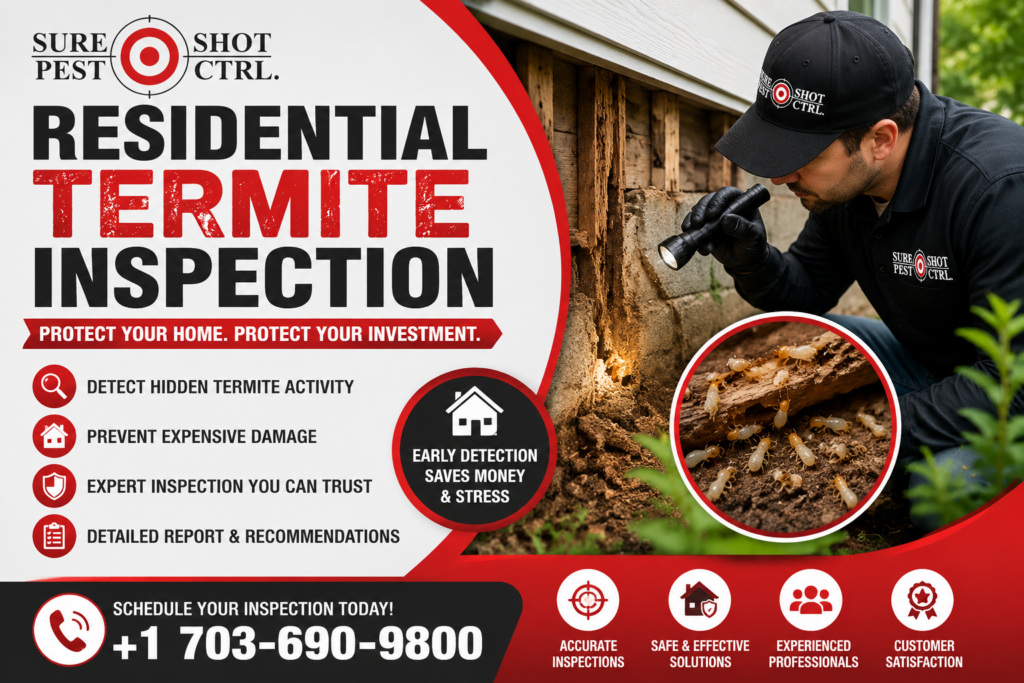
Many homeowners never see termites themselves. Instead, they notice subtle warning signs that indicate hidden activity.
Common signs include:
Mud Tubes
Subterranean termites build narrow mud tunnels along foundations, walls, and crawl spaces to travel while staying protected from dry air.
Hollow-Sounding Wood
Wood damaged by termites often sounds hollow when lightly tapped because termites consume the interior while leaving the surface intact.
Discarded Wings
After swarming, reproductive termites shed their wings near windows, doors, and light sources.
Bubbling Paint
Paint that appears blistered or bubbling may indicate moisture trapped behind walls due to termite activity.
Tight Doors and Windows
Damaged wooden frames may swell or weaken, causing doors and windows to become difficult to open or close.
Frass
Drywood termites leave behind tiny wood-colored pellets known as frass, which may accumulate near infested wood.
If you notice any of these signs, scheduling a Residential Termite Inspection promptly is recommended.
What Happens During a Residential Termite Inspection?
A professional inspection follows a systematic process designed to locate hidden termite activity without unnecessary damage to your property.
Exterior Inspection
The inspector examines:
- Foundation cracks
- Soil contact with wood
- Exterior walls
- Decks
- Fences
- Tree stumps
- Firewood storage
- Drainage issues
Interior Inspection
Inside the home, attention focuses on:
- Baseboards
- Window frames
- Door frames
- Utility penetrations
- Crawl spaces
- Basements
- Attics
- Plumbing areas
- Wooden flooring
Moisture Evaluation
Since termites are attracted to moisture, inspectors also identify:
- Plumbing leaks
- Poor drainage
- Standing water
- High humidity
- Ventilation problems
Inspection Report
After the inspection, homeowners typically receive a detailed report explaining:
- Active termite evidence
- Areas at risk
- Previous termite damage
- Recommended treatment options
- Preventive maintenance suggestions
This report helps homeowners make informed decisions about protecting their property.
Types of Residential Termites Found Around Homes
Different termite species require different treatment approaches.
Subterranean Termites
These are the most common termites affecting residential properties. They build underground colonies and travel through mud tubes to reach wooden structures.
Drywood Termites
Drywood termites live directly inside dry wood without requiring soil contact. They often infest furniture, framing, and attic structures.
Dampwood Termites
These termites prefer wood with high moisture content and are commonly associated with water leaks or decaying wood.
Understanding the termite species allows a Residential Termite Inspection Company to recommend the most appropriate treatment plan.
When Should You Schedule a Residential Termite Inspection?
Many homeowners wait until they notice visible damage, but regular inspections are far more effective.
Consider scheduling an inspection:
- Once every year
- Before purchasing a home
- Before selling a property
- After discovering moisture problems
- Following nearby termite infestations
- After completing home renovations
- If your home has a history of termites
Annual inspections provide peace of mind and help catch issues before they become major repairs.
Benefits of Hiring a Residential Termite Inspection Company
Choosing an experienced Residential Termite Inspection Company offers several advantages over attempting to identify termites yourself.
Professional inspectors:
- Know where termites typically hide
- Recognize subtle signs homeowners may overlook
- Use specialized inspection equipment
- Identify conditions that encourage termite activity
- Recommend practical prevention strategies
- Provide detailed inspection reports
Their experience improves the likelihood of finding hidden infestations early.
How Homeowners Can Reduce Termite Risk
Although inspections remain essential, homeowners can also lower the likelihood of termite problems.
Helpful preventive measures include:
- Repair leaking pipes quickly.
- Keep gutters clean.
- Improve drainage around the foundation.
- Reduce wood-to-soil contact.
- Store firewood away from the house.
- Seal foundation cracks.
- Improve crawl space ventilation.
- Remove dead tree stumps.
- Trim shrubs away from exterior walls.
These maintenance practices reduce conditions that termites commonly seek.
Residential Termite Inspection vs. Termite Treatment
Many homeowners confuse inspections with treatments.
| Residential Termite Inspection | Termite Treatment |
| Identifies termite activity | Eliminates termite colonies |
| Detects damage and risk | Uses approved treatment methods |
| Provides inspection report | Protects structure after infestation |
| Preventive service | Corrective service |
Inspection comes first because it determines whether treatment is actually necessary.
Why Choose Sure Shot Pest?
At Sure Shot Pest, every Residential Termite Inspection is performed with careful attention to detail. Our team understands the behavior of termites, common risk factors, and effective inspection methods that help homeowners make informed decisions.
We focus on:
- Thorough property evaluations
- Clear inspection reports
- Honest recommendations
- Modern inspection techniques
- Customer-focused service
Our goal is to help homeowners identify problems early and protect their property for years to come.
Conclusion
A Residential Termite Inspection is one of the smartest investments homeowners can make. Because termites often remain hidden until significant damage has occurred, routine inspections provide an opportunity to detect problems early, reduce repair costs, and maintain the long-term condition of your home.
If you want greater confidence in your home’s condition, contact Sure Shot Pest to schedule a professional Residential Termite Inspection. Early detection today can help prevent costly structural repairs tomorrow.
FAQ
1. How often should I schedule a Residential Termite Inspection?
Most professionals recommend scheduling a Residential Termite Inspection once every year. Annual inspections help identify hidden termite activity before major damage occurs. Homes located in areas with higher termite activity or previous infestations may benefit from more frequent inspections.
2. What does a Residential Termite Inspection Company look for?
A Residential Termite Inspection Company examines foundations, crawl spaces, attics, wooden structures, moisture conditions, mud tubes, damaged wood, discarded wings, and other evidence of termite activity. Inspectors also identify environmental conditions that may increase the likelihood of future infestations.
3. Is a Residential Termite Inspection necessary when buying a home?
Yes. A Residential Termite Inspection is highly recommended before purchasing a home. It helps identify hidden termite damage, active infestations, and structural concerns that may not be visible during a standard home inspection, allowing buyers to make informed decisions.
4. Can a Residential Termite Inspection prevent expensive repairs?
Yes. Regular Residential Termite Inspection services help detect termite activity in its early stages. Early identification allows homeowners to address problems before termites cause significant structural damage, reducing repair costs and protecting the property’s long-term value.