
A Rodent Control Company helps homeowners and businesses identify mice and rat activity, locate entry points, address infestations, and reduce the risk of future problems. In Springfield, Virginia, rodents can enter buildings in search of food, water, warmth, and shelter. Recognizing the warning signs early can help you protect your property and decide when professional pest control services may be necessary.
Rodents are more than an inconvenience. They can contaminate food, damage stored belongings, chew electrical wiring, and leave droppings in kitchens, basements, attics, and storage areas. Effective rodent management involves more than setting a few traps. It requires careful inspection, appropriate removal methods, sanitation, and prevention.
For property owners, understanding how a rodent inspection works and what to expect from a pest control specialist makes it easier to take practical steps toward a rodent-free environment.
Why Do You Need a Rodent Control Company?
A rodent problem can begin with a single mouse entering through a small gap or a rat finding an accessible food source. If the conditions remain favorable, rodents may establish nests and reproduce inside a property.
A professional Control Company assesses the situation, identifies signs of activity, and recommends methods suited to the building and the type of rodent involved.
Common reasons to contact a rodent control specialist include:
- Scratching, scurrying, or movement sounds inside walls and ceilings.
- Small, dark droppings in cabinets, pantries, garages, or basements.
- Gnaw marks on food packaging, wood, plastic, or wiring.
- Torn insulation or shredded paper that may indicate nesting.
- Unusual, persistent odors in enclosed areas.
- Repeated sightings of mice or rats, especially during daylight.
Seeing one rodent does not always mean a large infestation is present. However, repeated signs or fresh droppings in multiple locations indicate that a closer inspection is warranted.
A qualified technician can help determine the likely extent of the problem instead of relying on guesswork.
Common Rodent Problems in Springfield, VA
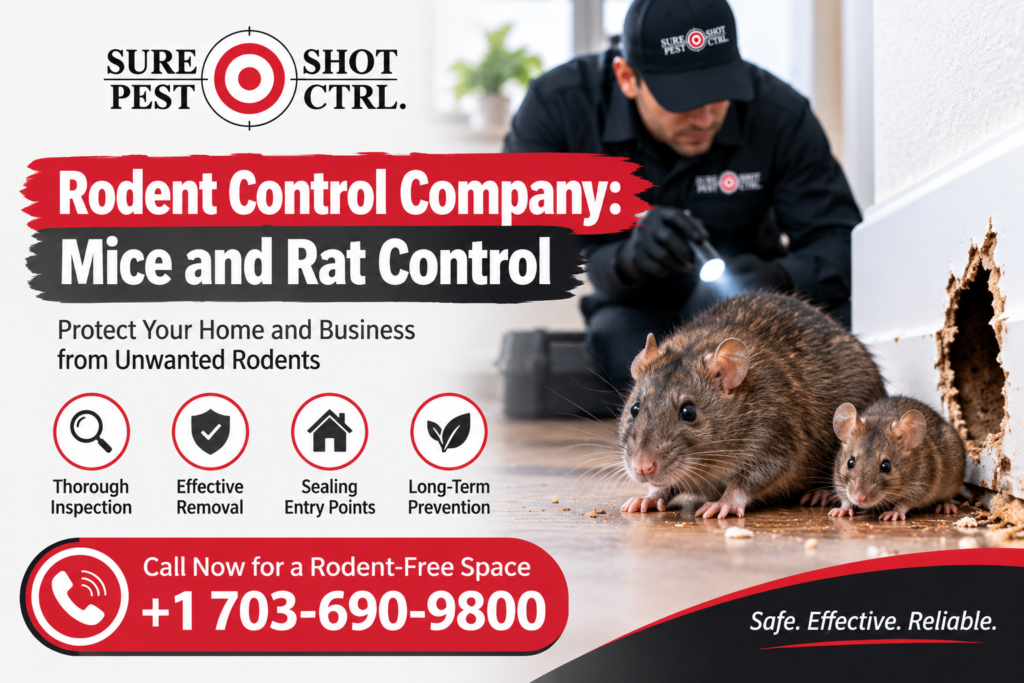
Springfield properties include houses, apartments, restaurants, offices, and commercial buildings. Each type of property has different conditions that may attract rodents.
Mice Inside Homes
House mice can enter through small openings around utility pipes, doors, vents, and foundations. They may nest behind appliances, inside cabinets, in attics, or within wall cavities.
Because mice can reproduce quickly when conditions are favorable, even a small population can become an ongoing issue. Look for droppings, gnaw marks, and damaged food packaging, particularly near storage and food preparation areas.
Rats Around Buildings
Rats may inhabit basements, crawl spaces, garages, exterior storage areas, and locations near accessible rubbish or food. They can travel along walls and utility routes while searching for food and shelter.
Rat activity may produce larger droppings, substantial gnaw marks, and visible damage to stored materials. Identifying the entry route and conditions attracting the animals is an important part of control.
Rodents in Commercial Properties
Restaurants, warehouses, offices, and retail buildings can attract rodents when food waste, clutter, or structural gaps are present. In food-related businesses, rodent activity can create sanitation concerns and damage inventory.
A suitable inspection should consider receiving areas, storage rooms, waste containers, loading doors, and utility penetrations. Businesses may also benefit from documented monitoring and a recurring pest management plan appropriate to their operations.
What Happens During a Professional Rodent Inspection?
A professional rodent inspection helps identify where rodents are active, how they enter a building, and what conditions may support their presence. The findings guide the recommended treatment and prevention plan.
1. Interior and Exterior Inspection
A technician may examine kitchens, basements, attics, crawl spaces, garages, storage rooms, and exterior walls. They may look for droppings, nesting materials, gnaw marks, damaged insulation, and openings around pipes or utility lines.
The inspection also considers nearby rubbish, vegetation, stored materials, and other possible food or shelter sources.
2. Identifying Entry Points
Mice can enter through surprisingly small gaps. The Centers for Disease Control and Prevention (CDC) notes that a mouse may fit through an opening approximately the width of a pencil, about 1/4 inch (6 mm).
A rodent control specialist checks for openings around doors, foundations, rooflines, vents, and plumbing penetrations. Appropriate sealing and repairs help reduce the chance of rodents returning after removal.
3. Assessing the Level of Activity
The technician evaluates the number and location of signs, possible nesting areas, and any continuing damage. This assessment helps determine whether targeted trapping, exclusion work, sanitation improvements, or additional monitoring may be appropriate.
4. Recommending a Treatment Plan
After the inspection, the company should explain the proposed methods, placement of traps or bait stations where appropriate, safety precautions, and any follow-up visits. Ask whether entry-point repairs are included or priced separately.
A clear plan should address both the rodents already present and the conditions that allowed them to enter.
Rodent Control Methods: What Works?
Effective rodent management combines removal with measures that make a property less attractive and harder to enter. The right approach depends on the rodent species, infestation level, building layout, and presence of children or pets.
Trapping and Monitoring
Traps can help remove mice and rats from identified activity areas. Their placement should reflect inspection findings rather than guesswork. Traps must be positioned and maintained according to manufacturer instructions and kept away from children and pets.
Ongoing monitoring helps determine whether rodent activity has declined or additional action is needed.
Sealing Entry Points
Exclusion involves closing gaps and repairing openings that allow rodents indoors. Suitable materials depend on the size and location of the opening; durable metal mesh, hardware cloth, metal flashing, or appropriate building repair materials may be used.
Sealing access points is an important part of lasting rodent management because removing rodents without addressing entry routes may leave the property vulnerable to re infestation.
Bait Stations and Rodenticides
In some situations, a pest control company may recommend rodenticide products in appropriate bait stations. These products require careful handling because they can harm children, pets, and wildlife if misused.
The U.S. Environmental Protection Agency (EPA) advises consumers to follow product-label directions and use suitable tamper-resistant bait stations where required. Ask the technician about product selection, placement, risks, and precautions before treatment.
Integrated Pest Management
Integrated Pest Management (IPM) combines inspection, monitoring, sanitation, exclusion, and carefully selected treatments. Rather than relying on poison alone, this approach addresses the conditions that allow pests to survive.
The EPA describes IPM as a practical, environmentally sensitive approach that considers the pest’s behavior and uses appropriate control methods while minimizing unnecessary pesticide risks.
For homes and businesses in Springfield, an IPM-based plan can provide a structured way to manage rodent activity and reduce recurring problems.
How to Prevent Rodents from Returning
Prevention is an essential part of any rodent control plan. Property owners can make several practical changes to reduce food, water, shelter, and access.
- Store food securely: Keep pantry items and pet food in tightly sealed containers. Clean crumbs and spills promptly.
- Manage rubbish: Use bins with tight-fitting lids and remove waste regularly.
- Repair gaps: Check doors, windows, foundations, vents, and openings around pipes. Repair damaged screens and door sweeps.
- Reduce clutter: Organize garages, basements, and storage rooms so potential nesting areas are easier to identify.
- Address moisture: Repair leaking pipes and faucets, and investigate damp areas.
- Maintain outdoor spaces: Remove accumulated rubbish and keep stored materials organized and away from exterior walls where practical.
- Inspect regularly: Look for fresh droppings, gnaw marks, and new openings, particularly in areas where rodents have previously appeared.
The CDC recommends removing food and water sources, eliminating shelter, and sealing entry points as key parts of rodent prevention.
How to Clean Up Rodent Droppings Safely
Rodent waste can expose people to harmful germs. Avoid sweeping or vacuuming dry droppings because these actions can release contaminated particles into the air.
According to CDC guidance, ventilate the area, where appropriate gloves, thoroughly wet droppings with a suitable disinfectant, allow the recommended contact time, and wipe up the material with paper towels. Follow the complete CDC cleanup instructions for the type and extent of contamination. Heavy infestations may require additional precautions or professional assistance.
If rodents have contaminated food, discard affected items rather than attempting to clean them for consumption.
How to Choose a Rodent Control Company in Springfield
Choosing a suitable Rodent Control Company involves more than comparing prices. Look for a service provider that explains its findings, recommends appropriate methods, and offers practical guidance for preventing future activity.
Before scheduling an appointment, consider the following factors.
Inspection process: Ask whether the service includes checking both interior and exterior areas, identifying entry points, and assessing signs of nesting.
Treatment methods: Find out whether the company uses trapping, exclusion, monitoring, bait stations, or a combination of methods based on the situation.
Safety procedures: Ask how technicians protect children, pets, occupants, and non-target wildlife during treatment.
Follow-up service: Confirm whether follow-up inspections or monitoring visits are available and what happens if rodent activity continues.
Written recommendations: Request clear information about the proposed treatment, service fees, repair work, and any preparation required before the visit.
For homeowners and business operators in Springfield, Virginia, these questions can help establish realistic expectations and make it easier to compare pest management services.
When Should You Call a Rodent Control Specialist?
You should consider professional assistance when rodent sightings continue, droppings repeatedly appear after cleaning, noises persist inside walls, or rodents are accessing difficult-to-reach spaces.
Professional help is also worth considering when wiring, insulation, food storage areas, or other building materials have been damaged. Businesses that handle food may need prompt attention to sanitation and pest management concerns.
A specialist can assess the situation and recommend appropriate next steps. However, the time required to address an infestation varies according to the rodent species, property conditions, access points, and treatment method.
FAQs
1. What does a Rodent Control Company do?
A Rodent Control Company inspects properties for signs of mice and rats, identifies possible entry points, and recommends appropriate removal and prevention methods. Services may include trapping, monitoring, exclusion, and follow-up inspections. The specific treatment depends on the infestation and the building’s conditions.
2. How much does rodent control cost in Springfield, VA?
The cost depends on the type of rodent, severity of the infestation, property size, accessibility, and treatment required. Entry-point repairs and repeat visits may affect the total price. Request a written estimate that explains the inspection, treatment, follow-up services, and any additional charges.
3. How long does professional rodent removal take?
The timeline varies with the number of rodents, available food sources, entry points, and treatment method. Some situations may require several monitoring visits, while more extensive infestations can take longer. Continued inspection and prevention measures help determine whether the problem has been adequately addressed.
4. How can I prevent rodents after a professional inspection?
Seal suitable entry points, store food in tightly closed containers, manage rubbish, remove clutter, and repair leaks. Monitor previously affected areas for new droppings or gnaw marks. A professional Rodent Control Company can also recommend property-specific prevention measures based on the inspection findings.
Conclusion: Protect Your Property with Sure Shot Pest
Rodent Control Company can cause property damage, contaminate food, and create health concerns if an infestation is left unaddressed. Recognizing early warning signs, arranging a thorough inspection, sealing entry points, and maintaining good sanitation are important steps toward long-term rodent management.
For homeowners and businesses in Springfield, Virginia, Sure Shot Pest can be your point of contact when you need information about rodent control services. Assess the signs of activity, ask about the inspection process, and discuss a treatment plan suited to your property.
Ready to address a rodent problem? Contact Sure Shot Pest to ask about rodent inspection, removal, and prevention options for your property.