
A Rodent Control Inspection is a detailed assessment of a property to identify signs of rats or mice, locate possible entry points, and determine conditions that may support rodent activity.
Unlike simply looking for a live mouse or rat, an inspection examines the areas where rodents commonly hide, travel, feed, and enter a building. The goal is to understand where the activity is occurring, how rodents may be getting inside, and what conditions need to be addressed.
For homeowners and businesses in Springfield, an inspection can be an important first step before choosing a rodent control approach. The U.S. Environmental Protection Agency recommends identifying and preventing rodent infestations by looking for evidence such as droppings, nesting materials, chewing damage, and openings that rodents can use as entry points.
Why Rodent Inspection Comes First
Effective Rodent Control starts with finding the source of the problem.
A few traps may catch individual rodents, but if an opening remains behind a cabinet, around a utility line, near the foundation, or around a roof feature, additional rodents may enter later.
The EPA’s Integrated Pest Management guidance describes inspection, identification, monitoring, action, and evaluation as an ongoing process. Inspection helps determine where pests are active and what environmental conditions are allowing them to remain on the property.
A professional inspection can therefore help answer important questions:
- Are rats or mice currently active?
- Where are rodents entering the structure?
- Are there droppings or nesting areas?
- Is there evidence of chewing or property damage?
- Are food, water, or shelter sources available?
- Which areas should be monitored or corrected?
- What type of rodent control may be appropriate?
This approach is particularly useful when rodent activity keeps returning after temporary measures.
Signs Checked During a Rodent Control Inspection
Rodents are often active when people are not around, so seeing a mouse or rat is not always necessary to identify a problem.
During a Rodent Control Inspection, attention is typically given to physical evidence and conditions associated with rodent activity.
Droppings and Odors
Rodent droppings may appear around food storage areas, cabinets, drawers, appliances, attics, basements, and other concealed locations. Persistent stale or unusual odors can also indicate activity in hidden spaces.
The EPA lists droppings, nesting materials, chewing damage, holes, and stale smells among common indicators of rat or mouse infestation.
Gnawing and Chewing Damage
Rats and mice may chew food packaging, wood, insulation, and other materials. Gnaw marks around openings can also help indicate where rodents have been moving.
Damaged materials should not automatically be assumed to be caused by rodents, which is why inspection should consider multiple signs together.
Nesting Materials
Rodents can use shredded paper, fabric, insulation, dried vegetation, and other materials to create nesting areas.
Attics, garages, wall voids, storage spaces, and less frequently disturbed areas can provide suitable locations for nests.
Entry Points
Small openings can become important access routes. An inspection may examine gaps around pipes, vents, doors, windows, foundations, utility penetrations, rooflines, and other structural features.
The EPA recommends sealing holes inside and outside a building as part of rodent prevention.
What Does a Rodent Inspection Include?
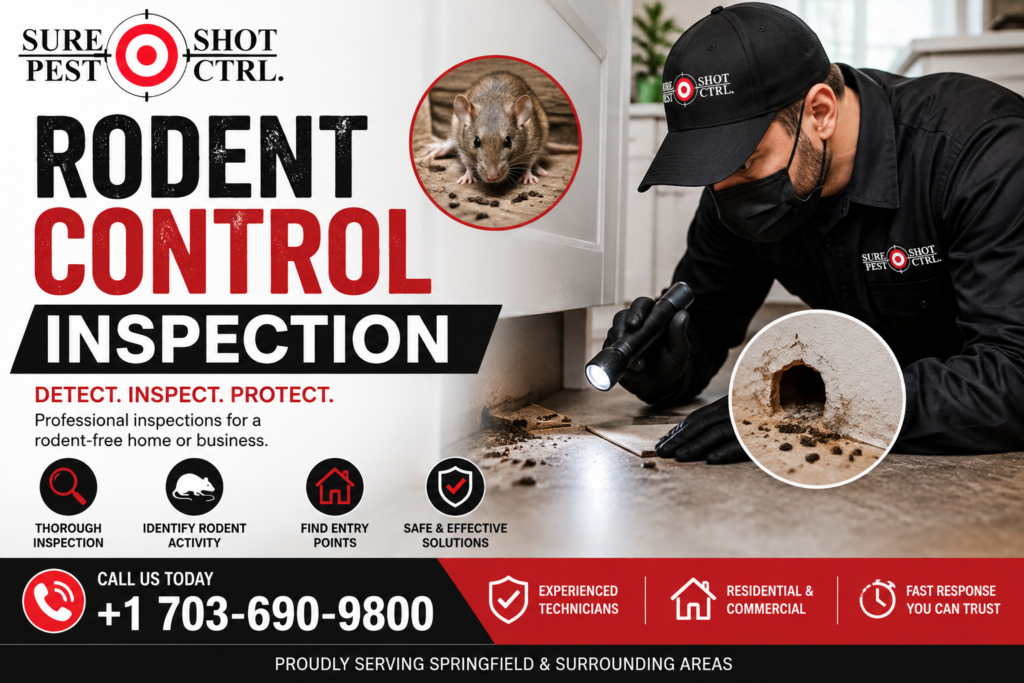
A thorough inspection looks beyond the room where a homeowner noticed a mouse.
Depending on the property, a Rodent Control Inspection may include an assessment of:
- Interior rooms and concealed areas
- Kitchen and food-storage locations
- Basements, crawl spaces, and garages
- Attics and roof-access areas
- Exterior walls and foundations
- Doors, windows, vents, and utility openings
- Areas around plumbing and electrical penetrations
- Landscaping and exterior conditions
- Signs of droppings, nesting, gnawing, and tracks
- Potential food, water, and shelter sources
The inspection findings can then be used to determine practical next steps.
Rodent Control Inspection in Springfield
Homeowners searching for a Rodent Control Inspection in Springfield are often dealing with one of several situations: unexplained noises, droppings, damaged food packages, scratching sounds, recurring sightings, or concerns about possible entry points.
Springfield properties can have different construction styles and exterior conditions, so an inspection should be based on the individual building rather than assuming every rodent issue has the same cause.
For example, a mouse entering through a small wall opening requires a different assessment from rats traveling around an exterior foundation. Likewise, attic activity may involve roofline access, while basement activity may be connected to foundation openings or utility penetrations.
That is why identifying the activity pattern is an important part of the inspection process.
How Rodent Control Works After an Inspection
Once rodent activity and contributing conditions have been identified, the next step is developing an appropriate control plan.
A complete Rodent Control approach can involve several components:
Exclusion
Exclusion focuses on reducing opportunities for rodents to enter the building. This can include identifying and addressing structural gaps and openings.
Sanitation
Food scraps, improperly stored food, accessible garbage, and other attractants can contribute to rodent activity. Keeping food sealed and waste contained can reduce available food sources.
Monitoring
Monitoring helps determine whether rodent activity continues and whether additional action is necessary.
Trapping or Other Control Methods
Depending on the situation, appropriate traps or other control measures may be considered. The EPA notes that options for rodent infestations can include traps and, where appropriate, infanticide products used according to their labels and safety requirements.
Infanticide use requires particular care around children, pets, and wildlife. The EPA recommends tamper-resistant bait stations for situations where dentifrices are used and emphasizes following product label directions.
The specific approach should depend on the property, rodent species, evidence of activity, and conditions discovered during inspection.
When Should You Schedule a Rodent Inspection?
You do not necessarily need to wait until you see a rat or mouse.
Consider arranging a Rodent Control Inspection if you notice:
- Droppings in cabinets, garages, attics, or other areas
- Scratching or movement sounds inside walls or ceilings
- Chewed food packaging
- Gnaw marks
- Nesting materials
- Unusual odors from concealed spaces
- Repeated rodent sightings
- Gaps or holes around the exterior of the building
- Signs of activity that return after previous control efforts
An inspection can also be useful when buying or maintaining a property where rodent entry points have not been recently evaluated.
Why Choose a Professional Rodent Inspection?
A professional Rodent Control Inspection can provide a more systematic evaluation than checking only the areas where rodents have been seen.
A qualified pest control company can examine both interior and exterior conditions, document signs of activity, identify potential access points, and explain which issues may need attention.
The EPA advises consumers to choose pest control companies carefully and to verify licensing requirements with the appropriate state pesticide regulatory agency.
For Sure Shot Pest, the focus should be on identifying the conditions contributing to rodent activity and helping property owners understand practical control and prevention options.
Simple Ways to Help Prevent Rodent Activity
Professional inspections and treatments work best when combined with sensible property maintenance.
Keep food in sealed containers, remove garbage regularly, clean food spills, and avoid leaving pet food and water accessible overnight. Also inspect the exterior of the building for gaps and openings.
Outdoor conditions matter as well. Leaf piles, dense vegetation, clutter, and other sheltered areas can provide rodents with places to hide. The EPA recommends reducing food, water, and shelter sources as part of an integrated pest management approach.
Prevention does not mean a property can never experience rodents. Instead, it reduces opportunities for rodents to establish or maintain activity.
Rodent Inspection vs. Rodent Treatment
A rodent inspection and rodent treatment are not the same thing.
Inspection identifies the problem. Treatment addresses the problem.
An inspection may reveal that the suspected rodent activity is actually old, that entry points are present but no current infestation is evident, or that active signs are concentrated in a particular part of the property.
This distinction helps avoid applying a one-size-fits-all solution.
The EPA’s IPM model similarly emphasizes inspecting and identifying pests before selecting control methods, followed by monitoring and evaluation.
FAQ
1. What happens during a Rodent Control Inspection?
A Rodent Control Inspection examines a property for evidence of rats or mice, including droppings, nesting materials, chewing damage, odors, tracks, and potential entry points. Interior and exterior areas may be evaluated to understand where rodents are active and what conditions may be contributing to the problem.
2. How often should I schedule a Rodent Control Inspection?
The appropriate frequency depends on the property and its history. An inspection may be useful after repeated rodent sightings, previous infestations, structural repairs, or when signs such as droppings and chewing appear. Properties with recurring activity may benefit from periodic monitoring.
3. Can a Rodent Control Inspection find hidden mice?
Yes. A professional inspection can look for indirect evidence of hidden mice, including droppings, nesting materials, gnaw marks, odors, and access routes. Rodents may remain concealed, so physical evidence can be important even when no mouse is visible.
4. Should I get an inspection before Rodent Control treatment?
Yes. An inspection can help identify where rodents are entering, where activity is occurring, and which property conditions may be contributing to the issue. This information can help a Rodent Control provider choose appropriate control and prevention measures.
Conclusion: Start With a Thorough Inspection
Rodent problems rarely begin with the moment you see a mouse or rat. There may already be entry points, food sources, nesting areas, or other conditions supporting activity.
A Rodent Control Inspection provides an opportunity to identify these conditions before choosing the next step. For homeowners and businesses in Springfield, understanding where rodents are active and how they are accessing a building can make rodent management more organized and targeted.
Sure Shot Pest can help property owners evaluate suspected rodent activity and understand practical options for control and prevention. If you have noticed droppings, noises, gnawing, nesting materials, or other signs, contact Sure Shot Pest to discuss a rodent inspection for your property.